Get Full Government Meeting Transcripts, Videos, & Alerts Forever!
Get email alerts on the Board Ethics topic
No spam. Unsubscribe anytime.
Weddington planning board asks council to consider limiting members’ public commentary
Summary
The board voted to recommend that Town Council consider a code-of-conduct change discouraging planning-board members from publicly commenting on pending or potential projects outside duly noticed meetings, citing concerns about misinformation and appearance of bias; critics said it could chill legitimate resident engagement.
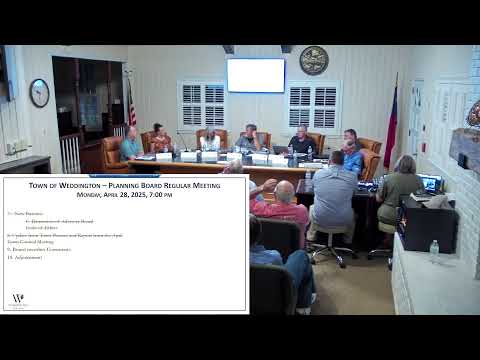
The Weddington Town Planning Board voted on April 28 to ask Town Council to consider language that would discourage planning-board members from publicly commenting on pending or potential projects outside duly noticed meetings, including on social media and in news media.
Supporters said restricting off-meeting commentary preserves transparency, avoids the appearance of bias and keeps deliberations in the public record. “Planning board members shall refrain from publicly commenting, discussing, or expressing opinions about pending or potential projects outside of duly noticed planning board meetings,” the recommended draft language read. Proponents said the rule would help prevent the spread of incorrect information and reduce the political rhetoric surrounding contentious development items.
Opponents and some board members said the proposal could limit helpful, factual clarification to residents and chill legitimate one-on-one outreach. Board members described situations where a staff- or member-led clarification to a concerned resident corrected factual misunderstandings and reduced community alarm. At least one member said he had met with a resident at her request to explain technical aspects and that the conversation calmed misinformation within neighborhood groups.
After extended debate about optics, legality and practical enforcement, the board voted to forward the proposed code-of-conduct language to Town Council for consideration (vote recorded in the meeting minutes as 4–2). The recommendation is advisory; Council will decide whether to adopt any code change and how to balance board independence against transparency and public engagement.
Town counsel/staff clarified in the meeting that such guidance is legally permissible but noted it does not bar a board member from appearing as a private citizen; the practice is recommended to avoid appearance-of-bias issues during active review of applications.
Next steps: staff will draft formal language and provide Council with legal guidance for Council’s consideration.