Get Full Government Meeting Transcripts, Videos, & Alerts Forever!
Get email alerts on the Municipal Governance topic
No spam. Unsubscribe anytime.
Caseyville board approves surplus sale, utility-liens ordinance and no-parking designation; adopts appropriations
Summary
At its June 3 meeting the Caseyville board approved a resolution declaring village-owned property surplus, moved to allow liens for unpaid utilities, amended a no-parking ordinance for Third Street/Suzanne Court and reviewed budget line items; multiple motions passed by recorded 'yes' votes.
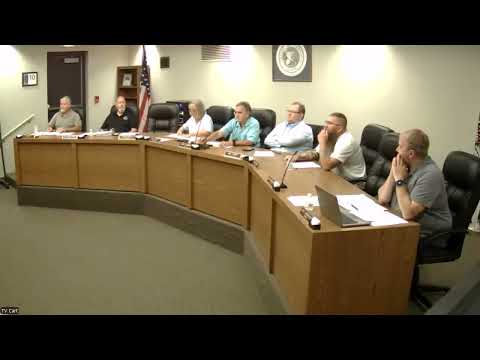
The Caseyville board on June 3 approved a series of motions including a resolution declaring village-owned property surplus, an ordinance to allow liens for unpaid utility charges and a no-parking designation affecting Third Street and Suzanne Court.
The board first moved on a resolution labeled 26-18 that the meeting record shows would declare certain real property surplus and authorize its sale in accordance with state law; attendees voted in favor during the roll call. Minutes show a separate item, resolution 26‑Y, concerning the demolition of a property at 56 Court East was also taken up and recorded as approved by those present.
The board next advanced ordinance 2026‑14, described in the meeting as an amendment to chapter 38‑2‑4 of the municipal code pertaining to liability for unpaid utility charges; the discussion referenced adding the ability to place liens on property to secure unpaid water or utility bills. Members indicated support and voted to approve the ordinance.
Members also considered ordinance 2026‑13 to designate no parking on portions of Third Street and Suzanne Court. A board member proposed an amendment clarifying the side and extent of the restriction (east side from William Street through Suzanne Court). The transcript records questions about whether a traffic study or formal request had preceded sign placement; the board reiterated that an ordinance is required before signs are installed. The motion as amended was recorded and received member approval.
During the meeting the board reviewed multiple appropriation line items across funds (general fund, fire protection, community building, parks, business district, hotel/motel, cemetery and others) and a total figure is recorded in the transcript (the audio was garbled for some numbers). The meeting record shows members voting 'yes' on the presented appropriations.
Board members also authorized a fellow member to sign on behalf of the village to close on listed properties later that week. A motion to adjourn carried at the end of the agenda.
What happens next: ordinances and the resolutions take effect according to the village’s statutory timelines and any required posting; the transcript does not specify effective dates or publication schedules for the approved items.