Get Full Government Meeting Transcripts, Videos, & Alerts Forever!
Get email alerts on the Park Policy Alcohol topic
No spam. Unsubscribe anytime.
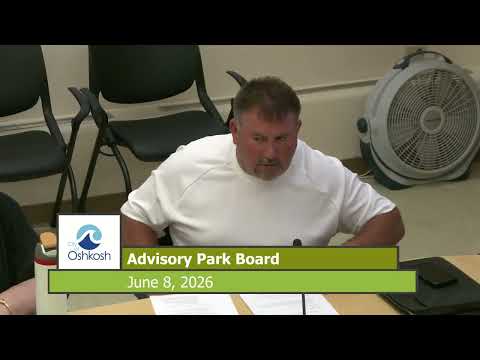
Parks board recommends ban on alcohol possession and consumption in two downtown parks
Summary
After hearing outreach and police observations of littering, public urination and disorderly behavior, the Parks Advisory Board voted to recommend an ordinance prohibiting alcohol possession and consumption in Opera House Square Park and William Waters Plaza Park.
The Parks Advisory Board voted to recommend a proposed Oshkosh City ordinance that would prohibit possession and consumption of alcohol in Opera House Square Park and William Waters Plaza Park, citing police and outreach team concerns about behavior in those small, downtown sites.
Chad introduced the ordinance proposal and said the draft and background were in the board packet. Assistant Chief Brian Shielders of the Oshkosh City Police described outreach team observations in the area around the sundial and gazebo: “If people can drink in there…that leads to some of the other problems of urinating or just being loud and swearing…illegal drug use,” Shielders said, and added the outreach team and officers have received citizen complaints about constant littering and explicit behavior.
Shielders said the department intends to implement a stepped approach: outreach and warnings first, not immediate citation, with signs posted after the ordinance is adopted. When asked, staff confirmed a citation for the offense would be the existing citation with court fees (the transcript references a $232 total citation/court fee figure).
Board members debated whether prohibiting alcohol in two small, high‑use downtown parks would simply push the behavior into adjacent parks. Multiple members said homelessness is not a crime and emphasized the ordinance targets alcohol‑related behavior, not people. One member recommended monitoring the ordinance’s effects across the season and comparing practices from other municipalities before broadening the rule.
A member moved to recommend the ordinance; the motion was seconded and the board carried the recommendation. The transcript records the motion being made and a voice vote; the board’s action is to forward the recommended ordinance to city council for consideration.
Next steps: staff said the outreach team will talk with frequent park users, signs will be posted if the ordinance is adopted, and the police department will collect monthly outreach and enforcement statistics to evaluate effectiveness.