Get Full Government Meeting Transcripts, Videos, & Alerts Forever!
Get email alerts on the Immigration Visa Certification topic
No spam. Unsubscribe anytime.
Philadelphia committee advances ordinance to standardize U‑ and T‑visa certifications
Summary
The City Council committee voted to report Bill 260303 favorably after testimony from police, prosecutors, legal advocates and survivors urging clear timelines, confidentiality safeguards and written denials to speed U‑ and T‑visa certification requests for immigrant crime survivors.
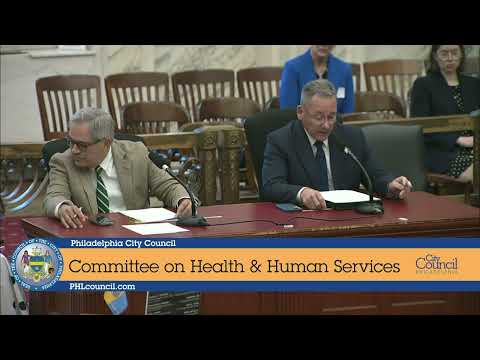
Philadelphia City Council’s Committee on Public Health and Human Services voted to report Bill 260303 from committee with a favorable recommendation, moving the ordinance one step closer to a full Council first reading. The bill would require local certifying agencies — the Philadelphia Police Department, the District Attorney’s Office and the Department of Human Services — to adopt publicly accessible procedures for responding to U‑ and T‑visa certification requests, set timelines including expedited review for urgent cases, protect confidentiality and provide written reasons when a request is denied.
Chair Ahmed opened the hearing by saying the bill is aimed at people who “survived something terrible” and who often cannot file for federal relief unless a local agency signs a certification. “A slow signature can be the thing that ends it,” Ahmed said, arguing that predictable timelines can preserve protection for survivors and their families.
Supporters of the bill — including law enforcement, prosecutors, immigration attorneys and survivor advocates — described both the practical need and the public‑safety rationale for standardized procedures. Francis Healey, chief of staff and deputy police commissioner for the Philadelphia Police Department, told the committee the department has handled certification requests since the federal programs began and said local practice already attempts to provide written explanations and follow‑up reviews. Healey noted that final immigration decisions rest with federal immigration authorities.
District Attorney Larry Kraner said U‑ and T‑visa protections are important prosecutorial tools and recounted a case in which certification helped secure testimony and a conviction. “We need these U visas,” Kraner told the committee, adding that recent federal enforcement actions may have discouraged victims from pursuing applications or cooperating with authorities.
Stephanie Costa, head of the DA’s immigration unit, described the office’s processing times: “About two weeks is the average, no more than a month,” she said, but added the office prioritizes urgent cases and will try to turn them around within 48 hours when possible. Police and DA witnesses described having staff dedicated to extracting court and investigative records needed to evaluate requests.
Advocates and legal service providers told the committee they still encounter long delays and inconsistent denials in practice. Isabelle Abrau, managing attorney at Highest Pennsylvania, said one client waited more than seven months for a police certification response. “Delays and uncertainty at this stage can prevent survivors from accessing the protections Congress created for them,” Abrau said. Sve Olsen of Justice at Work and Miguel Anil Romero of the Nationality Service Center described how timely certifications can facilitate release from detention and access to services.
The bill would also prohibit agencies from denying certifications solely because a long time has passed since a qualifying crime or because charges were not filed, practices advocates said can undermine federal eligibility criteria. Witnesses urged language access, training for certifying officials and confidentiality protections to reduce retraumatization.
After hearing testimony and public comment from a survivor advocate, Leah Hinanski, the committee moved to report the bill favorably. Council Member Driscoll made the motion to report Bill 260303 with a favorable recommendation and to suspend Council rules to permit first reading at the next session; the chair declared the motion carried on a voice vote.
Next steps: the bill will be placed on the agenda for first reading before the full City Council; the ordinance’s requirements for protocols, timelines, confidentiality and written denials would take effect only if and when the Council adopts the bill and any implementation provisions are put in place.