Get Full Government Meeting Transcripts, Videos, & Alerts Forever!
Get email alerts on the Illegal Dumping Enforcement topic
No spam. Unsubscribe anytime.
Committee considers tightening illegal-dumping standard to remove 'knowingly' defense
Summary
Witnesses told the committee bill 260380 would remove the word 'knowingly' from the short-dumping provision to permit stricter enforcement; members asked the Law Department for prosecution and collections data before further action.
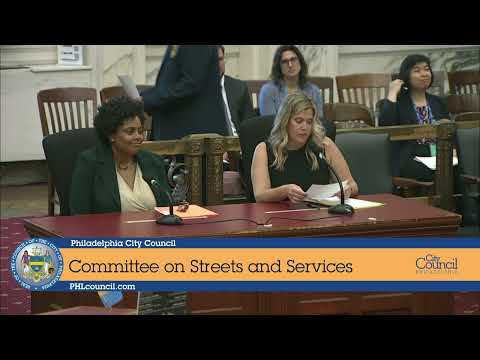
The Philadelphia City Council Committee on Streets and Services heard testimony on bill 260380, which would amend §10-710 of the Philadelphia Code by removing the word "knowingly" from the standard that determines short-dumping violations.
Noel Maronei, testifying as director of legislative affairs for the Department of Sanitation, said removing "knowingly" would close what the administration sees as a loophole that some alleged dumpers use to avoid liability — for example by claiming they borrowed a vehicle or were told dumping was permitted. "This change in the Philadelphia code is another tool in the toolbox to hold short dumpers accountable," Maronei said.
Kyle Lewis, the city's recycling program director and member of the illegal-dumping task force, said he supported the bill and the need to avoid additional loopholes. Committee members pressed the administration for data: Council Member Herity asked what percentage of fines issued in 2025 were actually collected and whether defendants had avoided liability because of the current "knowingly" standard. Maronei said the administration did not have a consolidated record on prosecutions tied to that statutory term and recommended the committee ask the Law Department to assemble specific figures.
Council Member Herity framed enforcement as a deterrence issue and suggested more public exposure of offenders. "We should be putting their pictures up on billboards...They embarrass the hell out of you," he said, arguing for stronger consequences for repeat or egregious offenders. Maronei and staff noted they had seen tactics by offenders to evade enforcement and agreed to follow up with the Law Department on prosecution and collection statistics.
The committee did not finalize a vote on the bill in this hearing; it requested additional information from the Law Department and recorded the administration's support for stronger enforcement language.
Next steps: The committee asked staff to request the Law Department provide details on the number of prosecutions, collected fines and any cases where the "knowingly" standard affected outcomes so members can weigh enforcement impacts before final action.