Get Full Government Meeting Transcripts, Videos, & Alerts Forever!
Get email alerts on the County Budget topic
No spam. Unsubscribe anytime.
Cowlitz County budget review flags opioid and veterans funds as near-term priorities
Summary
County staff reviewed multiple health and human-services funds, noting planned opioid-settlement spending and an impending depletion of a mental-health tax fund; commissioners raised concerns about using settlement dollars for permanent positions and asked for follow-up on housing and veterans set-asides.
County staff presented a line-by-line review of health and human-services funds at the Cowlitz County Board of Commissioners’ morning meeting, highlighting continued reliance on one-time settlement and tax revenues and prompting questions about replacement funding and program sustainability.
Sean, the staff presenter, reported on the Veterans Relief Fund (Fund 13101), saying the fund had about $1,074,879 in current cash and year-to-date tax collections of roughly $134,000 of an expected $235,000. When asked whether interest on that fund was being swept, Sean replied, “This fund is protected from that by, RCW” (statute number not specified). He also reviewed the Human Services Fund (Fund 1401), noting intergovernmental revenues coming in on a grant basis and a current cash balance of about $2.1 million.
Staff warned that funds tied to a previous mental-health tax are diminishing. Sean said remaining mental-health-tax proceeds are being transferred to the jail to offset medical-related expenses, including medication services, and that the remaining fund balance is expected to be spent by 2027. “After that, this fund will have no cash and will need to look for replacement funding,” he said, and the board signaled this will be a topic for 2027 budget workshops.
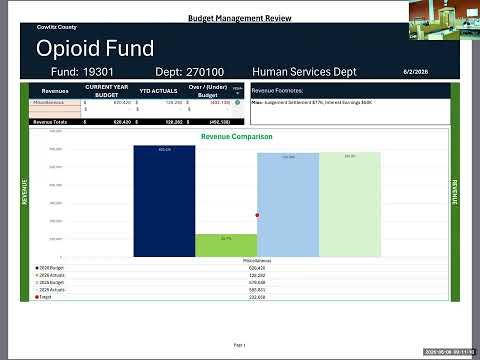
The board also reviewed opioid-settlement funding (Fund 19301). Sean said current collections for the fund were about $128,000–$129,000 against a budgeted $620,000 and that additional settlement payments were expected over the next several years. He described a current cash balance of about $3.15 million and listed planned expenditures and transfers.
A commissioner objected to using opioid settlement (referred to in the discussion as ‘‘Kemper’’) dollars for permanent staffing, arguing settlement proceeds should not underwrite full-time positions. “We should not be using Kemper dollars to pay for permanent employee jobs, full time employee positions,” the commissioner said, adding that temporary dollars should fund temporary positions. Sean acknowledged the concern and said it will be part of next year’s budget discussions.
Gina, who provided additional budget detail, reviewed support the county has provided to veteran-serving events. She confirmed the county typically pays venue and meal costs for an annual veterans ‘stand down’ resource fair (historical reimbursements in the $5,300–$6,500 range) and said organizers had asked to again include the event in the budget for the coming fall. Gina also described preliminary talks about using veterans relief funding to secure set-aside units in a new housing development and suggested the board discuss that item further when Commissioner Dhalla returns.
The board asked staff to supply clearer breakdowns distinguishing multi-year grants and contract obligations from available, uncommitted fund balances so commissioners can see what amounts are contractually spoken for versus what remains available for county-directed programs.
The meeting transcript records these budget discussions and requests for follow-up; it does not include a recorded formal vote on any budget decision or appropriation at this session.