Get Full Government Meeting Transcripts, Videos, & Alerts Forever!
Get email alerts on the Parks And Recreation topic
No spam. Unsubscribe anytime.
Residents press Walton County for more youth-sports fields; turf vs. grass debate intensifies
Summary
A packed Walton County workshop focused on a countywide shortage of playing fields, with residents and coaches urging faster action, better maintenance and consideration of turf to increase availability. Officials pointed to funding, land costs and statutory limits on tourist-tax use as constraints.
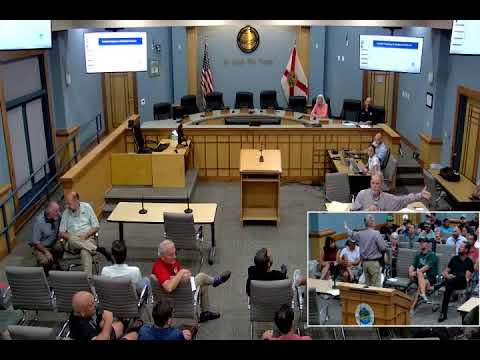
A crowded Walton County public workshop on parks and recreation drew repeated pleas from South Walton parents, coaches and educators for more fields and better maintenance, and opened a sharp debate over installing artificial turf.
“Tonight’s purpose is to engage and get feedback from the general public concerning the recreation facilities and availability,” the meeting moderator said, opening the session and reviewing a county field inventory that listed 23 diamond fields, 13 multipurpose fields and 16 pickleball courts.
Coaches and parents said the county faces a capacity problem that is already harming player development and safety. “We were unable to have a single practice on an actual field,” said Wes Dillon (speaker S24), a South Walton Little League coach, describing how teams have been reduced to practicing on patches of grass. School principal Brian Mickey (S27) told the county: “We have a problem of capacity. We don’t have enough fields for the kids that we have.”
Several residents argued turf could multiply availability and attract tournaments. “Turf’s a multiplier on availability,” a resident (S8) said, noting a single turf field can support more scheduled games and travel tournaments. Megan Harrison (S10), CEO of the local Chamber of Commerce, said tournaments bring out‑of‑area visitors and local economic benefits that could help justify larger, multiuse facilities.
County staff and the moderator cautioned that turf brings tradeoffs: higher installation costs, restrictions on unsupervised public use and long procurement timelines. The moderator said staff are considering turf in project planning but that the county must weigh “time, money and opportunity,” and prioritize getting more fields built and maintained first. He noted one ongoing expansion at Helen McCall that will add fields but said the county has been delayed by procurement and turf-related discussions.
Speakers repeatedly cited maintenance lapses – including holes on infields that caused injuries – as a central issue. “Field maintenance, yes, we need more fields, but we need to work on the holes that we are tripping in on our fields,” a lacrosse parent (S21) said. Staff confirmed the recreation operating budget is limited (recreation staffing and programs were cited at roughly $700,000/year with about $200,000/year in user fees), and that rec plat fees are restricted to parks and recreation uses and are spread across county projects.
Attendees also urged clearer prioritization and use of existing county land or agreements with large private landowners. Multiple speakers recommended preparing a ranked list of projects (for example: build four sod fields, then add a turf pilot) and pursuing public–private partnerships to assemble larger parcels.
The workshop closed with county staff directing attendees to a Walton County survey and announcing additional public sessions and a June 30 South‑end meeting to continue gathering input.
The county did not adopt any policies or take votes at the meeting; staff said next steps will include follow-up meetings and further review of land, funding and procurement options.