Get Full Government Meeting Transcripts, Videos, & Alerts Forever!
Get email alerts on the Ram Settlement Allocation topic
No spam. Unsubscribe anytime.
Residents urge aldermen to shift RAM settlement dollars north as HUDs committee hears public testimony
Summary
At a public hearing on Board Bill 22, scores of North St. Louis residents urged the Board of Aldermen to increase the portion of RAM settlement funds spent on tornado recovery and neighborhood stabilization to at least $150 million, criticizing slow aid distribution and urging accountability.
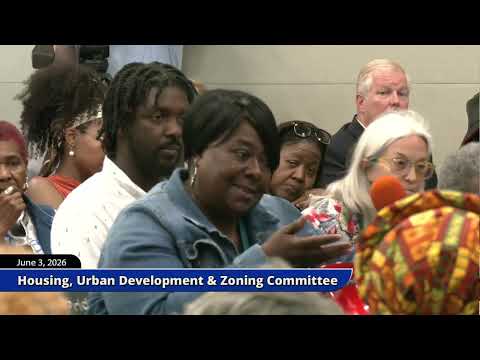
A crowd of North St. Louis residents told the Housing, Urban Development, and Zoning (HUDs) committee on Monday that Board Bill 22’s proposed allocations from the RAM settlement fund understate urgent recovery needs and leave too much for downtown projects.
President Megan Green presented the bill’s framework, saying the proposal would allocate $230 million in total and prioritize three buckets: a $79 million long-term tornado recovery fund, $31 million for North St. Louis neighborhood-plan implementation, and $65 million for major infrastructure (including a $30 million water fund). The bill would also set aside $55 million for downtown revitalization and create smaller pots—such as a $5 million vacancy-reduction fund—with each fund held in interest-bearing accounts, Green said. She said the package is designed to leverage state, federal and philanthropic matching funds.
“Many of us agree that $110 million is not enough,” President Green said in summarizing the bill and community feedback, adding that the board wants to ensure systems are in place to distribute funds faster than an earlier $30 million rollout. She announced a follow-up HUDs hearing on June 9 at 11:00 a.m. in the Kennedy Room for further amendments and testimony.
Speakers who testified during the public-comment portion asked aldermen to redirect more money to North St. Louis and to speed delivery of aid. Sharon Williams, president of the Homer G. Phillips resident association, said the city-owned senior building suffered tornado damage and ongoing neglect, including leaking windows and unsafe sidewalks, and requested funds for repairs and neighborhood stabilization.
“Not only is our building structure damaged by the tornado, but the sidewalks and streets are in disrepair,” Williams said, asking that the RAM funds “come back into North St. Louis.”
Several residents demanded a larger share of the RAM money—commonly citing the figure $150 million—calling it a floor to address accepted applications for home repairs and to prevent further displacement. Michael McLemore, who identified himself as an impacted resident, said allocating more funding to the North Side is necessary to rebuild trust and enable residents to access other federal recovery funds.
“We need $150 million from the RAM settlement fund allocated to North St. Louis recovery efforts,” McLemore said. “This is an opportunity for the city to start rebuilding trust.”
Organizers and residents described widespread problems with case management and agency follow-up, uneven application of demolition notifications, and continued health impacts from prolonged displacement. Multiple speakers cited personal medical crises, mold exposure, incomplete demolitions that left rubble in place, and long delays in outreach from recovery offices.
Speakers also pressed procedural reforms: Tamika Stigers read a citizen petition asking the Board of Aldermen to request a performance audit by the Missouri state auditor, citing concerns about grant administration and fiscal oversight.
Committee members acknowledged the urgency and the testimony. In closing remarks, President Green said the bill would move through the board before the July recess and that the committee intends to consider amendments at the next hearing; she emphasized a desire to allocate funds in ways that will reach residents faster than earlier efforts had done.
No formal votes were taken at the hearing. The committee recorded routine motions to excuse absences and to adjourn; a further HUDs hearing was scheduled for June 9 at 11:00 a.m. in the Kennedy Room for additional public testimony and proposed amendments to Board Bill 22.