Get Full Government Meeting Transcripts, Videos, & Alerts Forever!
Get email alerts on the Collective Bargaining topic
No spam. Unsubscribe anytime.
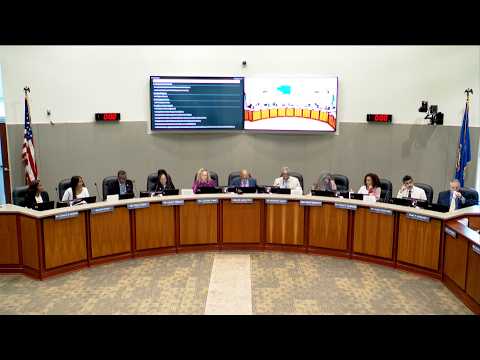
School board approves amendment to collective bargaining resolution after heated debate and public testimony
Summary
After more than an hour of debate and public comment, the Prince William County School Board voted 5–2 with one abstention to amend the division's collective bargaining resolution, changing the final review step for unfair labor practice claims; union representatives and teachers urged delay and consultation before the vote.
Vice Chair Jessie moved that the Prince William County School Board approve a proposed amendment to the division's collective bargaining resolution governing unfair labor practice procedures, setting a new final-review step for those claims. The board approved the amendment 5–2 with one abstention after extended comments from board members and multiple public speakers urging delay and consultation.
The amendment, explained by division counsel Mr. Anderson during board discussion, clarifies the relationship between the resolution's unfair-labor-practice procedure and the board's retained managerial authority under state law. "There was an internal inconsistency that arose between section 5A and the section of the ULP that's on the agenda tonight," Mr. Anderson said, describing the legal rationale for aligning the procedures with the board's authority.
Opponents — including several union-affiliated speakers during public comment and some board members — said the timing and process undercut trust and bargaining relationships. "Amending the collective bargaining resolution during an active contract without even communicating with us first makes your employees once again feel like we aren't a priority," said Angie Trey Tola, co-chair of a PWA organizing committee, urging the board to preserve binding arbitration and fee-recovery protections. Emily Cherry, a middle school teacher and PWA co-chair, asked the board to "preserve these protections and restore the spirit of collaboration" that the current resolution provides.
Board members who supported the change framed it as a governance and accountability clarification, not a change to negotiated contract terms. Boardmember Blake said the amendment "aligns the unfair labor practice process with the school board's existing responsibilities and authorities" while keeping independent fact-finding by a dispute-resolution neutral intact. Vice Chair Jessie, who moved the amendment, said the language seeks internal consistency with state law.
Board discussion included a failed motion to table the measure to the first meeting of the next school year. During the procedural debate, Mr. Jessie tried to table the item to a date certain (the board discussed September) but that motion failed on a 3–5 vote. The board then voted on the original motion; the clerk announced the tally as "five yes, two no, Wilk, Zargarpur, one abstain, Tredinnick," and the motion passed.
The meeting record shows persistent concern from educators and union representatives that the change could make future dispute resolution more difficult for employees. Several speakers urged the board to pursue direct meetings with PWA leadership before adopting changes to the resolution. The board did not record a follow-up commitment to schedule such meetings during the public session.
Next steps: The amendment was adopted at the June 3 meeting. The change affects the internal resolution language for unfair labor practice claims; it does not, according to board supporters, reopen negotiated contract provisions or change grievance procedures already in collective bargaining agreements.