Get Full Government Meeting Transcripts, Videos, & Alerts Forever!
Get email alerts on the Paving And Maintenance topic
No spam. Unsubscribe anytime.
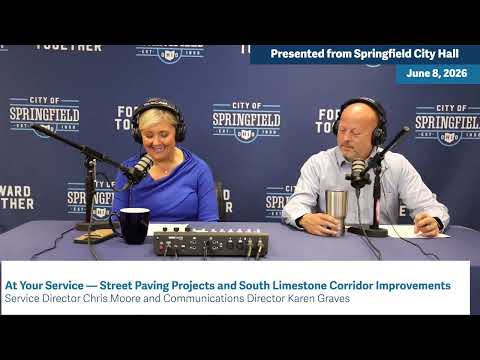
Service Director Chris Moore: City ramps up annual paving, targets Northern Estates and Selma Road
Summary
Service Director Chris Moore said the city will repave about 20'25 streets this season, focusing this year on Northern Estates and Selma Road; local levy funds of $2 million a year combine with other sources to bring total annual paving to roughly $3'.5 million.
Service Director Chris Moore said the city plans to repave roughly 20 to 25 streets this season, driven by a neighborhood-focused approach that prioritizes areas where utility work and pavement condition ratings align.
Moore said the city's neighborhood street program selects one area at a time sized to fit budgeting bands "between $1.75 million to $2.25 million," which helps keep contractor mobilization costs down. "We're it's it's 20 to 25ish," he said of the street count.
The program began in 2018; Moore said once this year's work is finished the city will have paved "roughly over 130 some odd roads." Selection relies on coordinating utility readiness (the gas company's mandated steel-line replacements), water- and sewer-service depth, and a third-party pavement condition rating done every five years. Moore described overlaying those data on a map, then asking utilities to prioritize areas where the city is ready to pave.
This year's neighborhood focus is Northern Estates in the northeast quadrant, bounded for planning purposes by Providence (south), Middle (east), Dur (west) and Villa Road (north). Moore said Selma Road is a separate, larger project the city will pave from Spring Street to the city limits at CTC; earlier work there included replacing water services and completing concrete work ahead of paving.
On funding, Moore cited the 0.4% income tax levy passed around 2019 that committed at least $2 million a year in local funds and said the city commonly spends about $3 million to $3.5 million a year on paving when additional funding sources are included. "We do at least two million with local money and then on top of that we start to add in other funding sources," he said.
Moore emphasized that resurfacing when a road is still repairable is a cost-saving investment compared with full reconstruction: crews replace old catch basins and water services where needed before paving to avoid earlier rework.
For residents with potholes or road concerns, Moore said to use the city website or call 937-525-5800 (Monday-Friday, 7 a.m.-4 p.m.). He described a tracked reporting system and said crews assigned to an area often address additional defects they find while working.
Moore said some projects (for example, Murray Street) have seen substantial progress despite weather delays and urged patience as the city coordinates contractors, utilities and weather windows. He said the neighborhood program's sequencing is meant to limit repeated dig-ups and reduce long-term costs.
The city expects to add this year's completed streets to its public map for future planning and to continue the multi-year program into coming seasons.