Get Full Government Meeting Transcripts, Videos, & Alerts Forever!
Get email alerts on the Operating Levy topic
No spam. Unsubscribe anytime.
Prior Lake‑Savage board approves November ballot language, raises operating levy ask to $1,740.97 per pupil after debate
Summary
After public comment and extended debate, the Prior Lake‑Savage Area Schools Board approved ballot language for a 10‑year operating levy (revoke and replace) set at $1,740.97 per adjusted pupil unit—about $46 per month for an average home—and authorized submission of a capital projects levy review to the state. The amended motion passed 4–3.
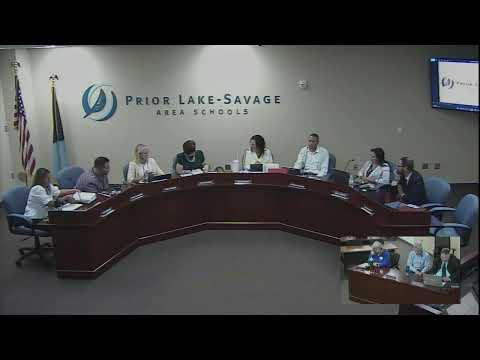
The Prior Lake‑Savage Area Schools Board of Education on June 8 approved ballot language for a November 3 special election that would replace the district’s existing operating referendum and add a contingent capital projects levy. After more than an hour of discussion and public comment, the board amended the operating request to $1,740.97 per adjusted pupil unit (APU)—approximately $46 per month for a typical homeowner—and approved the full ballot language and capital levy review and comment submission by a 4–3 roll‑call vote.
Administration framed the two‑question proposal as a paired approach: question one would revoke and replace the district’s current referendum with a larger 10‑year operating authorization and include an annual inflation adjustment; question two would be a 10‑year capital projects levy to fund infrastructure, safety/security and instructional investments and to shift certain utility costs off the general fund. Dr. Thomas and Director Ryder told the board that the capital levy could free up general‑fund dollars currently used for capital needs, allowing more revenue to be available for classroom priorities.
Public commenters urged both clarity and urgency. "Anything less further risks further eroding the quality of education our students receive," said Nicole Clener, a district parent, who urged the board to "support one of the larger levy amounts." Resident Rick Storyley asked the board to show multiple 10‑year cost scenarios tied to net tax capacity so homeowners could see possible outcomes over time.
Board members split sharply on how large an operating ask to place before voters. Supporters of the larger figure, including Director France, argued that the district needs enough sustained revenue to protect student‑facing programs and staff: "We really need to do something about increasing the revenue through levies," France said during deliberations. Opponents warned a higher dollar figure could reduce the measure’s chances at the ballot and urged a more modest ask that would be more likely to win voter approval.
The board first authorized administration to submit the capital levy plan for state review and comment; during the same meeting members debated the exact operating amount to include in the ballot question. An amendment to replace the $1,385.97 figure with $1,740.97 passed on roll call: Smith (I), France (I), Olstead (I), Mason (N), Johnson (N), Atinson (N), Chair Bullan (I). The board also approved the overall ballot language and related capital submission. Administration said the review and comment will be refined with architects and bond counsel, and that board action to formally call the election will follow required timelines in July.
The district presented projection tables showing three hypothetical outcomes under different per‑pupil amounts and noted that the operating levy is a fixed rate applied to net tax capacity—so total dollars collected would vary if the district’s net tax capacity changes. Director Ryder said the administration would continue refining public materials and provide scenario modeling that shows homeowner impacts under differing valuation growth rates.
Next steps: administration will finalize the state review and comment submission for the capital levy, complete campaign materials and return to the board as required before formally calling the election. If approved by voters, the operating authorization would take effect for taxes payable in fiscal 2028 and include the inflation adjustment described in the ballot language.