Get Full Government Meeting Transcripts, Videos, & Alerts Forever!
Get email alerts on the Contract Law topic
No spam. Unsubscribe anytime.
Appeals court reviews whether oral promise and equitable remedy were appropriate in Powell family business dispute
Summary
The panel heard arguments over a superior court ruling that enforced an alleged oral promise and awarded equitable relief allowing a corporation to remain at property and requiring relocation costs; appellant called the promise gratuitous and the remedy vague, while appellee argued reliance, investments and breach of fiduciary duty justified the remedy.
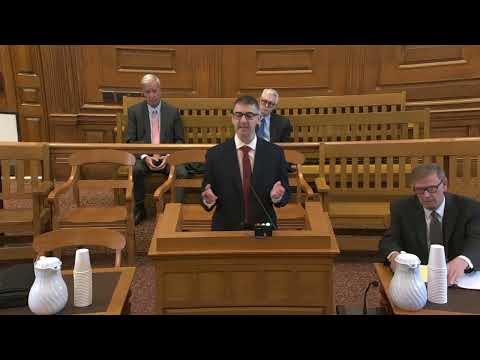
The state appeals panel on July 8 heard argument in Powell v. Powell (25P1040), a dispute over whether promises made within a family about ownership of a family-run auto-repair business created an enforceable obligation and whether the trial court properly fashioned an equitable remedy.
Appellant counsel Conrad Bzer Jr., representing the property owner (Irene Powell), read lengthy trial testimony used by the superior court to find an oral promise that the business would "be yours" and that the son could "stay as long as you want." Bzer argued the statements were gratuitous parental promises without consideration and that Robert Powell had not suffered the kind of detrimental reliance that would support promissory estoppel because he had already been working in the business for years.
Bzer challenged the superior court’s remedy as legally unsupported and potentially open-ended, noting the judge had ordered relocation costs and build-out obligations that could exceed the business valuation. Counsel argued there was no fiduciary duty to continue a lease to the corporation and described the trial judge's remedy as vague and outside the court’s authority.
Appellee counsel Albert Dapoli, appearing with David Mahoney and with Robert Powell present in the courtroom, defended the trial judge’s credibility findings and the remedy. Dapoli said the judge had substantial evidence of detrimental reliance: Robert Powell had invested in equipment (counsel cited a $40,000 contribution for a new booth), worked long hours building the enterprise, and forewent other career opportunities. Dapoli argued that when a factfinder concludes a fiduciary breach occurred, a court has equitable discretion to fashion relief that addresses the victim’s harm, including relocation or buyout options with reasonable limits.
Argument also focused on business valuation and relocation cost realism. Counsel described modern auto-body plant requirements (multiple spray booths, environmental control systems and permitting) and told the court that replicating the shop at a new site could cost substantially more than the business’s immediate market valuation. The panel questioned whether relocation costs would be subject to implied reasonableness and how a court should cap or guide such a remedy.
No opinion was announced from the bench. The panel thanked counsel and adjourned until July 9 at 11:00 a.m.