Get Full Government Meeting Transcripts, Videos, & Alerts Forever!
Get email alerts on the Anti Slap Appeal topic
No spam. Unsubscribe anytime.
Appeals court hears anti‑SLAPP challenge over AAB petition and missing master deed
Summary
The appeals court heard arguments in an anti‑SLAPP appeal stemming from condominium owners’ petition to the Architectural Access Board. Counsel debated whether the superior court properly found the plaintiffs’ claims had a substantial basis separate from the AAB petition; no decision was issued at argument.
Appellate argument in case no. 25 P 1071 centered on whether claims against condominium unit owners had a substantial basis independent of those owners’ petition to the Architectural Access Board (AAB), or whether the litigation was protected petitioning activity subject to anti‑SLAPP dismissal.
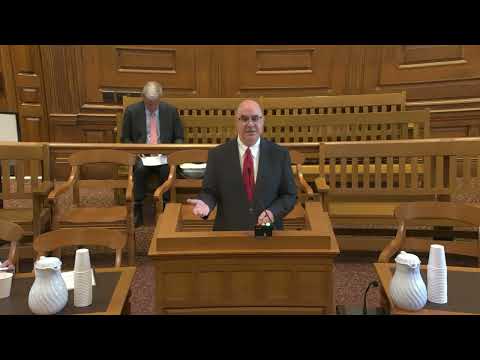
Appellants’ counsel argued that the core of the plaintiffs’ complaint is the AAB petition itself and that the superior court erred by finding the appellants had not shown the claims lacked a substantial basis outside petitioning. He told the court the complaint pleads that the association’s board passed a resolution directing counsel to pursue individual claims “as a result of having filed and actively pursued” the AAB matter and that those filings were protected petitioning. He emphasized that, "all of their claims fail if my clients never went to the AAB," characterizing the pleaded “actions” as the AAB petition rather than separate, non‑petitioning misconduct.
A justice pressed counsel on the record evidence of the master deed, asking where that instrument appeared in the appellate record. Appellants’ counsel acknowledged the master deed was not included in the anti‑SLAPP record below and said it was filed in a separate 30A appeal appendix; he could not point to the precise administrative‑record volume. Counsel argued, however, that the complaint alleges the master deed mirrors the condominium statute and therefore permits the petitioning activity he said is protected.
Throughout the appellants’ argument, counsel invoked case law starting with Durocraft and other decisions such as Columbia Plaza and Sabatini to draw a line between protected petitioning activity and independent non‑petitioning bases (for example, contractual breaches or allegations of trade‑secret disclosure) that can defeat an anti‑SLAPP motion. The bench repeatedly probed whether a contract or other preexisting obligation could supply a “substantial basis” for the plaintiffs’ claims even when the dispute would not have arisen but for the AAB filing.
The court and counsel debated hypotheticals—such as allegedly defamatory Facebook posts by unit owners—about whether but‑for causation alone converts otherwise independent out‑of‑proceedings conduct into protected petitioning. Appellants’ counsel relied on precedent distinguishing statements made within an administrative or statutory process from those made outside it.
After the appellants’ time expired, the court heard the association’s counsel, Peter Farber. Farber told the court the superior court followed the Bristol Asphalt framework and correctly concluded that counts two through seven of the complaint raised factual and legal issues separate from the AAB petitioning. He said the contested theory is not merely filing with the AAB but "the way they went about it," alleging the defendants circumvented procedures set out in the master deed (notice to other board members, internal discussion and voting) and thereby breached contractual and fiduciary duties.
Farber explained that the complaint alleges the association’s members took steps that bypassed the contractual process established in the master deed and the condominium statute, and that those procedural and fiduciary allegations supply an independent, substantial basis for the suit. He also noted the parties were involved in AAB proceedings for 16 months, and that Judge Karp reserved merits determinations while finding the threshold burden for denying the special motion to dismiss had been met.
A justice asked whether Judge Karp had a copy of the master deed when ruling on the anti‑SLAPP motion; Farber said he did not believe the judge had the deed before him and that the superior court accepted counsel’s representations about the deed’s language. The appeals court did not announce a ruling at the hearing.
The case will proceed on appellate briefing and the court’s eventual decision on whether the superior court properly found substantial, non‑petitioning bases for the plaintiffs’ claims. No judgment or opinion was handed down from the bench at the close of argument.