Get Full Government Meeting Transcripts, Videos, & Alerts Forever!
Get email alerts on the Student Parking topic
No spam. Unsubscribe anytime.
O'Fallon staff proposes pilot parking permits for students at Katie Caven Center
Summary
Parks staff told the Parks & Environment Committee that student parking has grown to about 160 vehicles in community center lots and proposed a one‑year pilot to issue up to 100 tagged student parking permits (50 per lot), mirroring high‑school rules; staff will return with ordinance language and enforcement options.
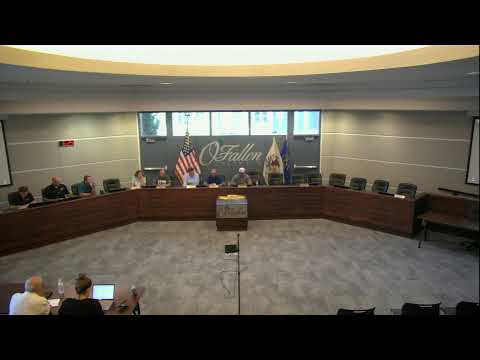
Parks staff told the Parks & Environment Committee that student parking at the Katie Caven Center and adjacent aquatic center has steadily increased, consuming roughly 160 spaces and leaving little parking for park programs and rentals. "Over the last year we've been tracking it ... until the end of the year we had 160 spots utilized by students," staff member Andrew said, explaining why the department is proposing a managed permit approach.
Staff proposed a pilot program to allow up to 100 students to park in city lots — 50 in the aquatic center lot and 50 in the Caven Center lot — and to issue vehicle tags tied to students' contact information. "We would mirror the school's policy ... charge the same fee," Andrew said, adding that the city would coordinate enforcement language with public safety and could return with an ordinance to formalize restrictions.
Council members and attendees raised concerns about equity, enforcement, and spillover to nearby residential streets. One council member noted that restricting on‑street parking could simply push vehicles farther away, and another urged coordination with the high school. Staff said the school declined to administer a program on city property; "Our first proposal was we will basically give you a number of spots and you guys run it just like your parking lot and they replied that they were not interested in that," Andrew said.
Multiple members favored a pilot: one suggested reserving a set of park spaces for park users first and leaving remaining spaces open to students, while others supported issuing passes so staff can contact drivers when problems arise. Staff said a pilot year would allow the department to evaluate enforcement needs and maintenance impacts. The committee expressed general consensus for staff to come back with draft ordinance language and implementation details.
The discussion concluded with staff agreeing to return to the committee with proposed ordinance language, enforcement options and a timeline for a pilot program; no formal ordinance was adopted at the meeting.
Next steps: staff will draft ordinance language and a pilot plan and return to the committee for formal consideration.