Get Full Government Meeting Transcripts, Videos, & Alerts Forever!
Get email alerts on the Stormwater And Habitat topic
No spam. Unsubscribe anytime.
Commission presses for engineer confirmation, limits on cattail dredging at 100 Pocono Road
Summary
Brookfield commissioners pressed for a one‑sentence certification from the project engineer that plans conform to 2024 stormwater standards and discussed restricting dredging depths to 12 inches (or requiring replacement plantings) to protect broadleaf cattail habitat.
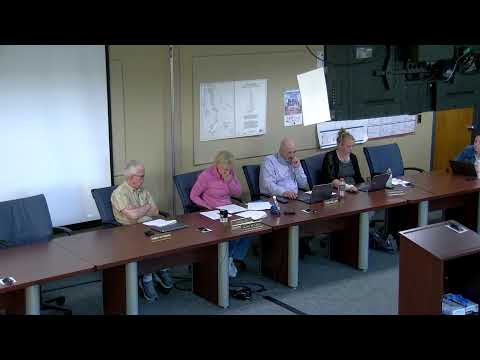
The Brookfield Inland Wetlands Commission spent the bulk of its June 8 meeting debating conditions for a proposed project at 100 Pocono Road, focusing on compliance with 2024 stormwater rules and the ecological implications of dredging cattails.
Chair Sharon Fox said the commission needs a short, written statement from the project professional engineer (KSE) confirming the plan “conforms to the 2024 stormwater management” before the commission can finalize action. Commissioners discussed whether such a statement would allow the commission to condition approvals administratively or require applicants to return with revised plans.
Fox led a technical exchange about cattail species and dredging: she summarized that "there are 3 different kinds of cattails" — broadleaf (native), narrowleaf (non‑native) and hybrids — and said shallow dredging (about 12 inches) would leave roots intact, while removing all roots would require digging 18–24 inches. She proposed a mitigation option: if dredging must go deeper than 12 inches, the applicant should buy and replant broadleaf cattail bare‑root stock (roughly a $150 expenditure for a dozen plants plus shipping).
Why it matters: Cattail stands provide cover and nesting habitat for wetland wildlife; deeper dredging risks destroying root systems and converting the plant community. Commissioners framed the question as a trade‑off: allow necessary sediment removal for site function, or limit disturbance and require mitigation to preserve habitat.
Commissioner comments also focused on timing (prefer dredging in fall or spring, not hot summer months) and on procedural authority: Laura Barkowski (inland wetlands enforcement) explained agent approvals cover minor upland review area activities and that actual wetland work may lie outside agent scope and therefore require full commission review.
Next steps: Commissioners asked staff to request a one‑sentence engineer confirmation from KSE that the proposed work conforms to 2024 stormwater management standards and to return the matter to the next meeting with that confirmation and any revised plans. If applicants need to dredge deeper than 12 inches, commissioners indicated they expect a mitigation plan for replacement plantings or equivalent measures.
No final permit decision was recorded in the transcript; the item was continued to allow the engineer’s statement and any plan revisions to be filed.