Get Full Government Meeting Transcripts, Videos, & Alerts Forever!
Get email alerts on the Hud Entitlement Funding topic
No spam. Unsubscribe anytime.
Worcester services committee recommends City Council accept about $5.9 million in HUD entitlement funds
Summary
The Worcester City Services Committee on June 8 recommended that the City Council file for and accept approximately $5.9 million in HUD entitlement funding (CDBG, HOME and ESG) for FY2027, approving allocations for public services, housing, school facility improvements and homeless services.
On Monday, June 8, the Worcester City Services Committee recommended that the City Council file for and accept federal entitlement funding for fiscal year 2027 from the U.S. Department of Housing and Urban Development, including Community Development Block Grant (CDBG), HOME Investment Partnerships (HOME) and Emergency Solutions Grant (ESG) dollars.
Chairperson Gary Rose read the motion asking the full council to adopt resolutions to file for and accept the entitlement funds, and the committee voted unanimously to recommend the resolutions. The clerk called the roll: Councilor Christian King, Councilor Kate Tumi and Chairperson Gary Rose each voted yes.
City staff told the committee Worcester’s total entitlement allocation this year is just under $5.9 million. Gregory Baker, director of neighborhood development, said the CDBG allocation is roughly $4 million and that annual formula funding has been relatively stable, with only a slight drop this year. He noted specific HUD caps: public services are capped at 15% of the CDBG allocation, which this year amounts to about $611,484, and planning and administration generally max out at 20%.
“Community development block grant…we received about 4 million, which is roughly what we receive every year,” Baker said. He described how CDBG funding will support neighborhood stabilization projects, infrastructure work coordinated with the Department of Public Works, code compliance, small-business assistance and a set-aside for school capital projects in low- and moderate-income neighborhoods.
James Brooks, director of housing development and healthy homes, said HOME funds total about $1.5 million this year (a roughly 3.8% decrease from prior years). Brooks described HOME’s primary uses as tenant-based rental assistance (TBRA) and financing for new affordable housing construction, from large developments to smaller infill projects such as Habitat for Humanity builds.
Brooks summarized ESG, the HUD program that funds homeless services, saying the city’s annual ESG allocation was just under $360,000 this year. He said staff obtained HUD permission to reallocate small prior-year balances (about $383,000), bringing total ESG resources available this year to roughly $743,000. “So this year we have…$743,000 that are available for this year,” Brooks said.
Staff also told the committee that housing development will receive just under $500,000 in project funding this year, and that approximately $1 million of CDBG was set aside to support capital improvements at neighborhood-centric schools in low- and moderate-income areas as a city manager priority.
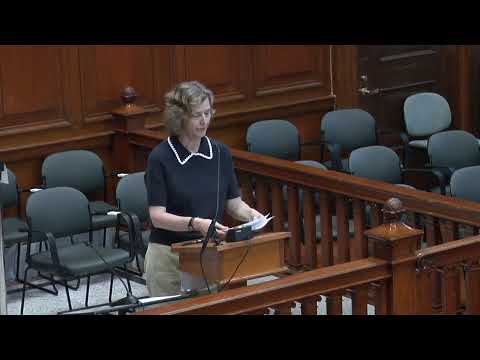
Members of the public who requested time praised the funding streams and described how the grants support services on the ground. Trish Shappert, executive director of Friendly House, thanked the committee and said her agency’s two public-service programs under the request served about 14,184 unduplicated households in the last 10 months of the fiscal year. “This is really a critical program to kind of keep in the city of Worcester,” Shappert said, describing bilingual case management, food and eviction-prevention work.
Olga Valdman, representing Rise for Health, said the ESG/HOME/CDBG support will help refugee and immigrant communities navigate and access health insurance and related services. Anthony Bazado, president and co-founder of Revive of the USA, thanked the committee for funding for addiction-recovery and related programs.
The committee asked staff about oversight. Baker and Brooks said the department does annual desktop monitoring of payment requests, requires documentation with each request, uses budget monitors and a grants compliance manager to sign off before checks are issued, and conducts on-site monitoring. Baker said the city recently hired a long-term housing monitoring professional to track HOME-related restrictions and to visit properties, contact landlords and ensure property standards are maintained.
Committee members asked how the department supports organizations that did not receive funding. Staff said most previously funded organizations were level-funded this year but that three public-service requests were not supported: one had unresolved audit findings, one submitted an ineligible application format, and a third’s request was deemed too large compared with available funds. Staff described technical-assistance workshops and ongoing outreach to help applicants improve future proposals.
After discussion, Chairperson Gary Rose read the formal motion recommending that the City Council adopt resolutions to file for and accept FY2027 entitlement funding (CDBG, ESG and HOME) through HUD. The committee voted to recommend the resolutions to the full council. The committee then approved minutes from April 6 and adjourned.
What’s next: The committee’s recommendation will go to Worcester City Council for consideration of the resolutions to file for and accept the fiscal year 2027 entitlement funds.