Get Full Government Meeting Transcripts, Videos, & Alerts Forever!
Get email alerts on the Subdivision Modification topic
No spam. Unsubscribe anytime.
Board hears request to relax wood-shingle siding rule for Highlands at Devon lots
Summary
Applicants for the Highlands at Devon subdivision asked the planning board to modify a 1994 condition requiring natural wood shingles for several lots; applicant counsel argued changed circumstances and lack of visual impact justify the change; the hearing was closed for board consideration.
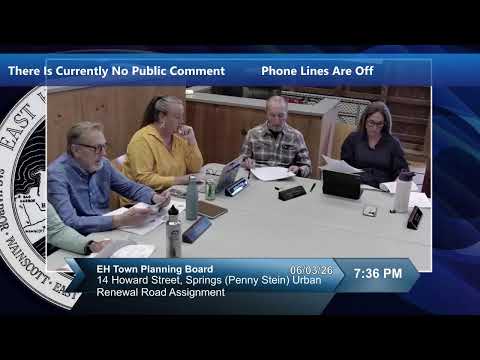
The planning board received a public hearing on June 3 for a proposed modification to the Highlands at Devon final subdivision, where applicants seek to change a condition of approval that limited residential exteriors to natural wood shingle siding and roofing for lots one through three.
John read the notice into the record. Will of the planning department explained the parcel is 10.7 acres on Cranberry Hole Road, partially within significant state-designated fish and wildlife habitat and a recommended scenic area; the original subdivision was approved by resolution on Dec. 7, 1994. The application requests relief from the previous covenant, arguing the restriction is no longer necessary for visibility mitigation.
Applicant counsel Dave Kur, representing 122 CHR LLC and related owners, said the restriction did not serve to benefit other lot owners or neighboring properties and that one property in the subdivision had already deviated from the covenant without producing the visual impact the restriction was intended to prevent. He asked the board to find changed circumstances that would justify modifying the condition.
No callers participated; after the applicant’s comments, the board closed the public hearing and moved the matter to its work agenda for further review and any required next steps.
What’s next: The board will review the record and the planning department’s materials before determining whether to recommend the modification or request additional findings or conditions.