Get Full Government Meeting Transcripts, Videos, & Alerts Forever!
Get email alerts on the School Nutrition topic
No spam. Unsubscribe anytime.
City High students urge gradual improvements to GRPS school lunches with 'Project Fresh Food'
Summary
Four City High/Middle students presented 'Project Fresh Food,' asking GRPS to pilot healthier menu changes, add student feedback to procurement, and reduce ultra‑processed items; they cited school survey results and requested board support for phased changes within USDA rules.
Four City High/Middle students presented a proposal called “Project Fresh Food” during public comment at the Grand Rapids Public Schools board meeting on June 20, urging the district to pilot menu improvements to the USDA‑funded school lunch program.
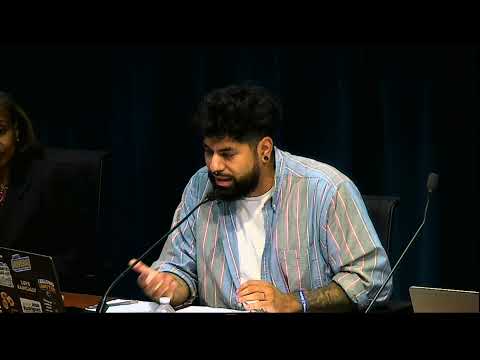
Mateo Resendiz, speaking on behalf of a group of students, said the goal is gradual change through pilots and community sponsorships rather than a costly district overhaul. He said the students are not blaming cafeteria staff but want procurement and menu choices adjusted to improve nutrition and reduce waste.
Sriram Jaikar, who identified himself as presenting evidence and surveys, said a small poll found roughly 70 respondents who disliked the school lunch and estimated that about one‑quarter of a typical 7th‑grade class sometimes skipped lunch. He suggested four practical steps the students believe would fit within regulations: restricting added sugars in bids, limiting distant suppliers of ultra‑processed foods, banning certain food dyes and sodium nitrite where feasible, and establishing a student feedback system so the district knows which meals are consumed versus discarded.
Marley Kerr, a student council president, presented cost estimates and international comparisons, saying similar budgets in countries such as Japan, Finland and France yield higher‑quality meals through differing program priorities. The students asked the board to consider pilot programs that could incrementally raise food quality.
Nirvana Pradhan closed by urging the board to convert the presentation into action, arguing nutrition affects learning and recommending greater student input in procurement decisions. Board members thanked the students and did not take immediate action; trustees and staff acknowledged budget constraints and state USDA rules while inviting continued student engagement.
The students asked for specific district follow up and offered to work with food services on pilot design and feedback mechanisms.