Get Full Government Meeting Transcripts, Videos, & Alerts Forever!
Get email alerts on the Land Use Rezoning topic
No spam. Unsubscribe anytime.
Woodland planning commission hears rezoning request to allow transfer station and truck yard on Sherman Way
Summary
The Planning Commission heard a proposal to rezone three Sherman Way parcels from light to heavy industrial to accommodate a Waste Connections transfer station and a temporary truck-parking operation; staff recommended approval with conditions including a three-year phase-two building requirement, but the commission made no final rezoning decision and closed the hearing for staff follow-up.
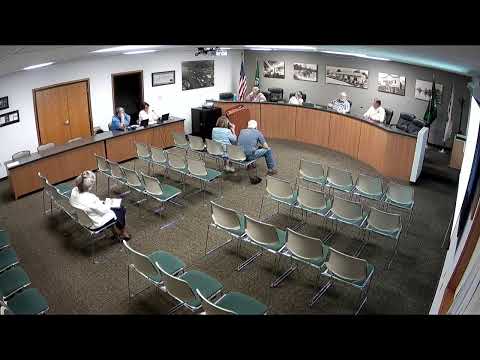
The Woodland Planning Commission held a public hearing on a proposal to rezone three parcels on Sherman Way from light industrial to heavy industrial to permit a Waste Connections transfer station and a Truck Guard truck-parking/storage yard.
Travis Goddard, Woodland’s Community Development Director, told the commission the application covers lots 5 and 6 of the Woodland Commerce Center binding site plan and the Woodland Truck Line parcel at 1776 Sherman Way. Goddard said staff reviewed the request under the city’s zoning-map amendment rules (Woodland Municipal Code section 1784) and related provisions and had drafted a recommendation of approval conditioned on three items in the staff report, including a phasing requirement that phase two construction be started within three years or the rezone could sunset.
The applicant’s representative presented paper site plans and said the plan would put a temporary Truck Guard contractor/trailer parking operation on lots 5 and 6 and locate the transfer station on the Woodland Truck Line parcel, with a future rail spur and scales laid out for potential rail loading. The applicant emphasized the site’s adjacency to a rail line and described the transfer station layout and proposed circulation.
Community and commissioner questions focused on operational and safety controls. Commissioners pressed whether Truck Guard’s online reservation/parking model would allow overnight sleeping, whether hazardous-material loads would be stored, and whether the site is engineered for stormwater controls and oil separators. Staff said final engineering, drainage reports and stormwater treatment plans have been submitted concurrently with the zoning application and must be reviewed and approved prior to final connections or permanent occupancy.
Brian, a representative identified in the hearing as from Waste Management/Waste Connections, said the transfer station startup would create about five jobs and that operations at the outset may be limited to specific days; he also stated the operator did not plan overnight storage of fleet vehicles at the transfer station. “We’re looking at five new jobs for a startup,” Brian said.
Commissioners and staff discussed the rail access in depth. Staff and the applicant said a future rail spur is being planned and the site is being laid out to allow eventual rail service, but that building a spur and coordinating rail loading can take years and depends on railroad agreements and economics. Staff noted that a transfer station is not a permitted use in the light-industrial zone—one reason heavy-industrial zoning was requested—but that the zone change itself does not approve any specific operational permits, which are considered through the site-plan and building-permit process.
Several commissioners expressed wariness about long-term, unfettered truck storage on an otherwise rail-capable site. Staff emphasized the phasing condition in the draft decision: the applicant must commence phase-two construction within three years to preserve the zoning change; otherwise, staff warned, the zoning could sunset. Staff also noted that traffic impact fees, fire protection requirements and other impact fees are typically collected at building permit and that the city can impose site-plan conditions on signage, final engineering and access.
No final rezoning vote was taken. The commission closed the public-hearing record and directed staff to follow up on the outstanding technical questions (stormwater engineering, fire marshal input on hazardous materials and occupancy, and clarification of existing parked trailers), and to distribute the staff report and draft decision to commissioners for their review before a subsequent meeting. The hearing record did not show a city decision on the rezoning at this meeting.
What’s next: staff will refine the draft decision and present a recommendation to City Council if the commission forwards approval; site-plan review and building permits will address operational details such as stormwater treatment, fire protection and TIF/impact-fee collection. If the applicant does not start the required phase-two building within three years, the rezone could be subject to sunsetting.