Get Full Government Meeting Transcripts, Videos, & Alerts Forever!
Get email alerts on the State Legislation topic
No spam. Unsubscribe anytime.
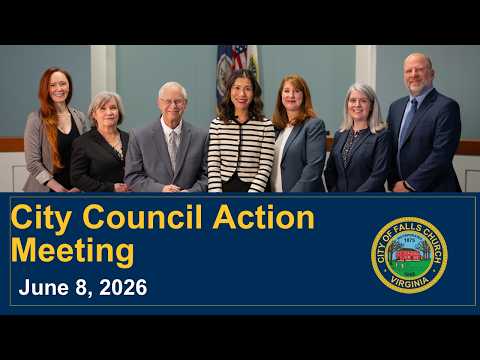
Delegate Simon tells Falls Church council special session still unresolved; data center tax dispute a key hang-up
Summary
At a June 8 Falls Church City Council meeting, Delegate Simon said the General Assembly remains in special session with a budget unresolved, citing disagreement over data center tax treatment and noting $153 million in proposed metro funding and expanded tenant protections among the stakes.
Delegate Marcus Simon, speaking to the Falls Church City Council on June 8, said the Virginia General Assembly remains in special session and has not yet adopted a two‑year budget, with the House and Senate scheduled to return June 18 and June 22, respectively. He identified the central sticking point as a disagreement over how to tax data centers, and warned that the timing and structure of any compromise will determine whether crucial local programs receive funding.
The broader context matters to Falls Church, Simon said: the House budget proposal includes a $153 million line to support regional metro funding that would otherwise fall to localities, while Senate proposals would reclaim roughly $2 billion by retaining a sales tax exemption for data centers. “Without state funding, that falls back on the local jurisdictions and I think it would cost the city here, you know, over a million dollars out of your own revenues,” Simon said.
Why it matters: Metro funding and education spending were singled out as priorities that could be affected by the impasse. Simon said the parties are negotiating revenue options — including a proposed energy‑consumption tax on data centers in the governor’s and House plans — but a roughly $500 million gap remained between competing proposals at the time of his briefing.
Simon highlighted other bills of direct local interest. He described legislative movement on housing and tenant protections — including expanded local authority to respond to health‑and‑safety housing violations — and pointed to an administrative by‑right law (discussed later in staff briefings) enabling qualifying tax‑exempt nonprofit properties to pursue affordable housing under specific affordability and height rules beginning in 2027. On elections, he cited efforts to strengthen paper trails and election administration practices; on public safety he noted enacted measures that ban certain assault weapons and target unserialized "ghost guns," some of which are already facing legal challenges.
Council members used the briefing to press for detail on items that will affect municipal operations. Members asked whether the state bills would require Falls Church to change local zoning or funding priorities, and raised concerns about mandates that limit local authority (for example, new requirements tied to housing near transit corridors and parking minimums). Simon and city staff agreed to follow up with technical analyses; the city’s legislative tracking memo (summarized later in the meeting) will flesh out implementation specifics.
Next steps: Simon urged continued dialogue and said the city can expect more clarity as negotiators return to Richmond. Council and staff asked for a prioritized list of bills requiring local action so departments can begin triage and budgeting once the final bills emerge.