Get Full Government Meeting Transcripts, Videos, & Alerts Forever!
Get email alerts on the Accommodations Tax topic
No spam. Unsubscribe anytime.
Council debates whether Community Fund Day qualifies for accommodations‑tax grants; places committee recommendations on next agenda
Summary
Councilors questioned why the advisory committee denied funding to Community Fund Day, arguing the event meets tourism and cultural criteria; the council voted 5–2 to place the committee’s accommodations‑tax recommendations on the next agenda after staff and counsel said the town’s application guidelines (not state statute) include a 50‑mile 'heads and beds' interpretation.
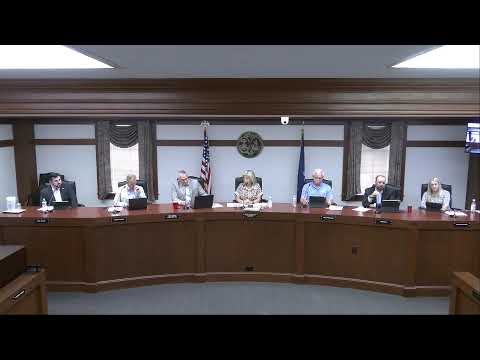
The Lexington Town Council spent the bulk of its May 18 work session debating whether Community Fund Day should have received money from the town’s accommodations‑tax special fund and whether the committee’s application guidelines need revision.
Mayor Hazel Livingston said she had “spent a lot of time reading the statute” and told the advisory committee’s chair she “still can’t understand why we are not allocating funds to community funday,” arguing the event “absolutely meet[s] the definition” for tourism and arts under the state statute and noting the application claimed it would bring 250 tourists. Marvin Robinson, chair of the accommodations‑tax advisory committee, replied that the committee’s reviews focus on measurable tourism impact and that the Community Fund Day application appeared designed primarily to serve local residents and community needs rather than to drive overnight stays. “We saw no impact that it would make on tourism or culture,” Robinson said, describing the committee’s approach.
Council members pressed staff and the town attorney about the town’s 50‑mile guideline, which many councilors cited as the practical rule used across jurisdictions to distinguish tourism‑driving events that generate hotel stays. Town Attorney David confirmed that statute requires municipalities to adopt application guidelines and said the committee’s 50‑mile interpretation is an administrative guideline used to identify events likely to generate overnight visits; he noted that the 50‑mile threshold is not explicit in state statute but has become a common practice among local committees.
Several councilors said they were sympathetic to Community Fund Day’s mission but emphasized the committee’s need for applicants to provide clearer evidence that attendees come from outside the immediate area. Council members and committee members recommended improved technical support for applicants—zip‑code tracking, post‑event reports and clearer application language—so events can better document "heads and beds" impact before the next funding cycle.
Will Allen and other councilors also raised the broader funding trade‑off between outside events and town‑owned venues such as the Ice House Amphitheater, saying town assets require more predictable support for maintenance. Committee members and staff urged honoring the committee’s recommendations this year while promising to revise the application guidance for future cycles.
After debate, Council Member Todd Law moved to place the advisory committee’s accommodations‑tax awards on the next council agenda. The motion passed by hand vote, five in favor and two opposed. Council directed staff and counsel to clarify reporting requirements for the Chamber/visitor organization and to examine whether unused or returned 30% funds could be reassigned in future years.
The committee and staff were urged to work with borderline applicants in advance of next year’s cycle to collect evidence—zip‑code sampling, ticketing or other verifiable metrics—showing that attendees are coming from outside the town and are likely to use local lodging. The council did not alter awards at this meeting; it only agreed to carry the committee’s recommendations forward for formal action at the next agenda.