Get Full Government Meeting Transcripts, Videos, & Alerts Forever!
Get email alerts on the Governance topic
No spam. Unsubscribe anytime.
Easley City Council debates code changes: move swearing-in to December and reshape agenda rules
Summary
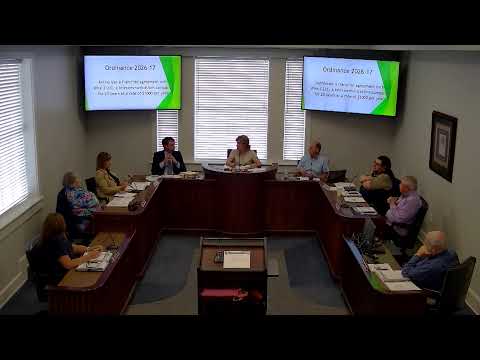
During second reading of Ordinance 202618, council members proposed moving the swearing-in of newly elected officials to the December meeting and debated amendments clarifying the mayor’s role and whether the city administrator should remain the gatekeeper for agenda items; a three-member mechanism to add items drew particular scrutiny.
Council members discussed two proposed amendments to Ordinance 202618, which would amend Chapter 30 of the Easly City code. The first amendment would change section 3005B so that newly elected officers take office after the close of the December regular council meeting (rather than being sworn in at the January meeting). Advocates said the change shortens the transition gap and helps new members ‘‘hit the ground running’’; opponents questioned administrative and pay implications and whether related ordinances would need revision.
The second amendment would change section 3024B to clarify that the city administrator prepares the proposed agenda "in consultation with council and the mayor," explicitly including the mayor in the consultation clause to avoid later misreading. That clarification drew a broader debate: some members favored codifying decorum rules and elements of Robert’s Rules to formalize meeting conduct, while others worried about making dense procedural rules into law without broader review.
A central dispute centered on who serves as the agenda gatekeeper. Supporters of the proposed change described a three-member threshold that would allow any three council members to request an item be placed on the agenda, aiming to prevent a single council member from blocking discussion while still providing guardrails against items that do not have at least some council support. Opponents argued removing the chief administrative officer’s gatekeeping role could create conflicts of interest, create ripple effects in other ordinances, and complicate legal responsibility for the agenda’s content.
Why it matters: the code changes affect governance, lines of administrative authority and how quickly new council members may assume duties. Council members repeatedly cautioned about unintended consequences, including whether pay and other ordinances referencing swearing-in dates would require amendment.
What’s next: council debated specifics and asked staff and the city attorney to review the language to avoid unintended changes; no final vote was recorded in the work session.