Get Full Government Meeting Transcripts, Videos, & Alerts Forever!
Get email alerts on the Hazard Mitigation topic
No spam. Unsubscribe anytime.
Master Plan Review Committee hails strengthened hazard mitigation plan that boosts FEMA and CRS readiness
Summary
At a Livingston Parish Master Plan Review Committee meeting, LSU'affiliated presenters described a substantially expanded five-year hazard mitigation plan that emphasizes flood data and CRS-related measures, lists more than 200 mitigation actions and will be forwarded to the parish following FEMA review.
Livingston Parish's Master Plan Review Committee received an update on the parish's updated hazard mitigation plan that committee members and consultants said strengthens the parish's eligibility for FEMA assistance and for Community Rating System (CRS) benefits that can lower residents' flood-insurance premiums.
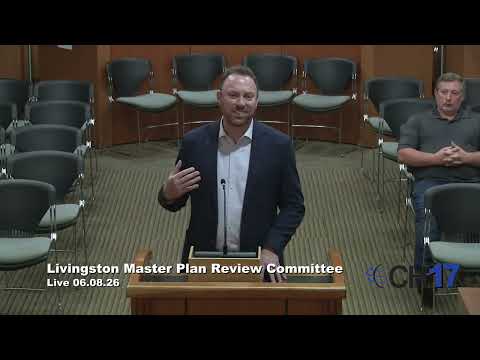
"These hazard mitigation plans keep you eligible for post disaster mitigation funding," said Chris Ripto, Hazard Mitigation Program Manager at the Stephenson Disaster Management Institute at LSU, reviewing the plan's role in FEMA eligibility and explaining additions made for flooding and CRS-related documentation. Ripto said the update relied heavily on community input and incorporated FEMA's National Risk Index as an additional data source.
Why it matters: A stronger plan can make the parish eligible for more kinds of mitigation funding and improve its CRS score, which directly affects flood-insurance costs for homeowners in flood-prone areas.
Ripto said the update revised the hazard-identification approach, moving from a standardized checklist to a community-driven profile of parish-specific threats. "Whereas before we took a relatively standardized approach ... this time we integrated community feedback and also included a couple of additional data points, namely in the form of the National Risk Index," he said. He added that each profiled hazard must have at least one associated mitigation action; Livingston Parish's document "far and away surpass[es] that," with Ripto estimating the plan contains more than 200 mitigation actions across the parish.
Committee members asked whether the plan prescribes construction projects such as raising home slabs; Ripto clarified that the plan identifies and prioritizes mitigation strategies and makes communities eligible for funding, but it does not itself execute physical construction. "We merely identify the strategies and include that in the plan. And then when the time comes when money becomes available, that's when the projects take place," he said.
The committee also discussed plan maintenance. Ripto said the formal review cycle is every five years but recommended regular, informal updates—commonly annual reviews and post-event adjustments—so lessons learned are recorded before the next formal revision.
Homeland Security director Chris Anderson, who oversees the parish's plan coordination, told the committee his office worked closely with LSU and the parish grants team on the update. "We're 638 pages this year," Anderson said, noting the plan now includes additional hazards such as ice storms. He also described mitigation infrastructure under development, saying the parish plans a protective facility "90,000 square feet rated at a 175 mile an hour" to increase safe-room capacity.
Next steps: Committee members said the updated plan will be on the parish council agenda for approval and that, once FEMA issues final approval, the plan will be turned over to the parish and participating communities for local ownership and ongoing updates. The committee encouraged continued coordination with grants staff to position the parish to pursue mitigation funding when opportunities arise.
(Attribution: quotes and statements are from presenters and committee members recorded in the committee transcript. "Committee member" is used where speakers in the transcript did not provide a full name.)