Get Full Government Meeting Transcripts, Videos, & Alerts Forever!
Get email alerts on the Capital Projects topic
No spam. Unsubscribe anytime.
Board approves capital projects list funded by capital sales tax with 70/30 revenue split over 15 years
Summary
The board approved a capital projects list to be funded by a capital sales tax, adopting a funding split of 70/30 over a 15-year term; the motion passed unanimously in open session after executive session.
The board approved a capital projects list to be funded by a capital sales tax, adopting a revenue split of 70/30 over a 15-year term.
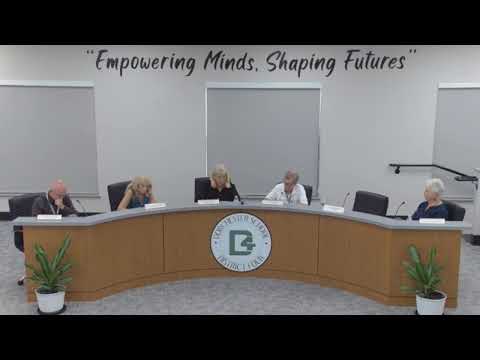
A committee member (S2) moved to adopt the capital projects list "based on a split of 70 30 revenue based on the 15 year term," and a second was recorded; the chair announced the motion passed unanimously. The transcript records the chair announcing that the motion was made by "miss Evelyn Edfinger" and seconded by "mister Fogg" when the motion was entered into the record.
Why it matters: the decision sets a funding allocation approach for capital projects tied to a capital sales tax and establishes a 15-year financing term. The transcript does not include project-level details, dollar totals for the projects, or a numeric roll-call; board members voted 'Aye' and the chair described the vote as unanimous.
Details and procedure: the motion as stated in open session specified a 70/30 revenue split and a 15-year term but did not list the specific projects included on the capital projects list in the open record. No effective dates, project dollar amounts, or department implementation plans were provided during the recorded discussion.
Next steps: the meeting record shows approval of the funding approach; project-level implementation steps and timelines were not specified on the record and would appear to rely on subsequent staff work or future board action.