Get Full Government Meeting Transcripts, Videos, & Alerts Forever!
Get email alerts on the Picnic Tables topic
No spam. Unsubscribe anytime.
Moraga commissioners consider town-milled redwood versus recycled-plastic picnic tables at Rancho Laguna Park
Summary
Parks staff told the commission that diversion-incentive funds can cover milling of town redwood felled for unrelated projects, but the budget, yield and lifecycle costs depend on an imminent arborist report; public commenters overwhelmingly favored traditional wood tables and commissioners pressed staff for fuller cost and maintenance analyses.
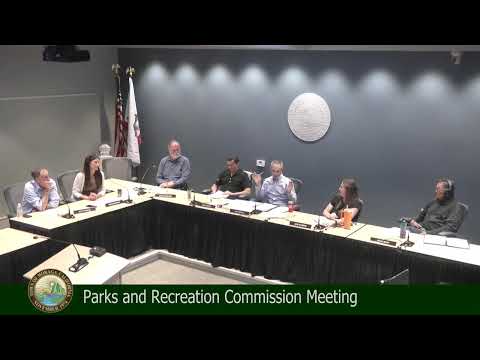
Parks and Recreation Director Mackenzie Brady updated the Moraga Parks and Recreation Commission on options for replacing picnic-table planks at Rancho Laguna Park, saying diversion-incentive funds previously allocated for recycled-content tables can also be used to mill redwood from trees the town expects to remove for unrelated public-works work. Brady told commissioners the town has a potential supply of redwood and that RecycleSmart has approved the use of diversion funds to pay for milling and planking work.
The matter matters because staff previously planned to use $113,000 from a diversion-incentive allocation toward recycled-plastic tables, but milling town redwood could reduce procurement cost and create a “local story,” Brady said. She gave preliminary per-board-foot figures: Home Depot’s rough-grade surfaced redwood is about $4 per board foot, while a local miller has estimated roughly $1.50–$2 per board foot including milling and delivery. Staff also noted maintenance and life-cycle differences: the commission was told an internal parks estimate for redwood table upkeep is roughly 236 annual maintenance labor hours (weekly inspections, biweekly washing, sanding/staining/sealing and occasional board replacement).
Commissioners pressed for more detail and earlier public access to the staff analysis. Commissioner Parker asked how the 236 annual maintenance hours were calculated and whether the estimate includes biweekly washing, sanding and graffiti removal; Brady said the parks maintenance staff prepared the breakdown and that a full scope and cost analysis will be provided in the staff report once the arborist’s tree assessment is complete. Commissioner Smith pressed transparency, saying in the meeting record that “transparency is zero in this thing” and asking that packet materials be made available earlier than the standard 72-hour posting; Brady said she would look into earlier distribution but remains constrained by the timing of the arborist report.
Public commenters expressed a clear preference for wood. One resident who ran a short Nextdoor survey told the commission the results were “overwhelmingly in favor of wood tables,” and several neighbors described the park as a valued, low‑impact gathering place used by seniors, children and dog owners. Commissioners also floated using milled redwood planks for future town projects or selling excess planks to residents if inventory allows.
No formal decision or vote was taken on material selection during the meeting. Next steps: an arborist report scheduled for Wednesday will establish how many board feet are available from trees slated for removal; staff will obtain a miller’s yield and cost estimate and then publish a full analysis for the commission and public. Director Brady noted that some reimbursement related to prior table orders is expected “by the end of June,” per the discussion at the meeting.
The commission deferred final action pending the arborist and a full staff report that will include lifecycle comparisons, maintenance assumptions and a clear cost estimate to present before any procurement or project authorization.