Get Full Government Meeting Transcripts, Videos, & Alerts Forever!
Get email alerts on the Battery Storage topic
No spam. Unsubscribe anytime.
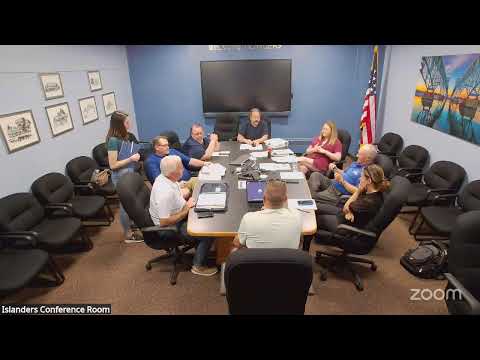
Grand Island planning board tables battery-storage law after technical and safety concerns
Summary
Members raised safety, NFPA compliance and siting questions about a draft battery energy storage (BESS) law, formed a technical working group with staff and engineers to reconcile red-line edits, and agreed to bring a consolidated draft back for another public hearing; no final vote was taken.
The Grand Island Planning Board paused action on a draft ordinance to regulate battery energy storage systems after members and industry commenters raised technical, safety and siting concerns.
Board members said the draft — circulated with multiple red-line versions — omitted or conflicted with critical provisions of NFPA 855 and NFPA 55, the national standards the board intends to require. “This law was prepared completely lacking any knowledge of what’s in 855,” said Jim of CAB, an industry commenter who recommended explicit commissioning and hazard-mitigation language. Planning board members agreed the draft now references NFPA provisions in several places but that the references need to be stronger and clearer.
Why it matters: Battery systems can range from small home backup units to large, bus-sized facilities. The board said the ordinance must distinguish small accessory systems from primary-use storage facilities and require certifications and commissioning documentation so installations are designed, inspected and maintained to nationally accepted fire and electrical standards.
Board discussion and technical gaps Board members pressed for clearer definitions and capacity thresholds after noting the draft’s tier language was inconsistent; the terms “tier two” and “tier three” at one point read alike, obscuring which projects would be treated as accessory systems and which would be primary uses. One member said farms should not automatically be scored the same as industrial storage sites, and others said the proposed cutoffs and allowances for agricultural uses needed reworking.
Members also emphasized professional-certification requirements. “This needs to be certified in writing by a licensed New York State professional engineer,” a planning member said, arguing that electrical designs should be signed by electrical engineers and site plans by civil engineers. The board discussed replacing vague references to the ‘‘building code’’ with the town’s defined ‘‘uniform code’’ and explicitly requiring manufacturer approval and commissioning reports.
Fire-department coordination and commissioning Industry commenters and board members recommended that the ordinance require a commissioning plan that starts in design, includes in-construction inspections and produces a commissioning report per NFPA 855 and NFPA 55 before operation. The panel discussed requiring emergency-response plans, manufacturer certificates of approval, and pre-construction certifications from licensed engineers to ensure the town can verify compliance.
Siting, noise and neighborhood impact Members debated whether larger tier-two or tier-three facilities should be allowed in residential zones, raised concerns about visual and noise impacts from cooling and HVAC equipment, and discussed setbacks used for solar parks (noting a typical 500-foot standard) and whether batteries should have similar or different buffers. Soil compaction and road-loading requirements for siting were also flagged as technical items that need precise language.
Next steps Rather than vote on the draft, the board agreed to form a small technical working group of planning board members, staff and qualified engineers to reconcile red-line edits and NFPA requirements. The consolidated draft will be returned to the planning board and is expected to require an additional public hearing. A motion to table final approval was adopted.
What’s next: Board members said staff will circulate a single consolidated draft and that the item will return for public review and a future vote once the working group resolves technical inconsistencies and safety provisions.