Get Full Government Meeting Transcripts, Videos, & Alerts Forever!
Get email alerts on the Homelessness topic
No spam. Unsubscribe anytime.
Three nonprofits present unified shelter‑to‑housing plan as county homelessness rises
Summary
Union Gospel Mission, Damiano Center and CHUM outlined a three‑phase 'pathway forward' to coordinate triage, shelter and permanent supportive housing across St. Louis County, citing a 157% rise in chronic homelessness over a 10‑year span and requesting continued county support and oversight.
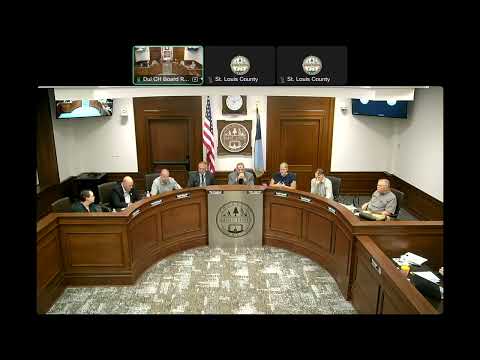
Union Gospel Mission, the Damiano Center and CHUM told the St. Louis County Board on Tuesday that a new, coordinated model could reduce chronic homelessness by creating a single triage point and a stepped shelter‑to‑housing pathway.
At a Committee of the Whole presentation, Seth Curry, executive director of the Damiano Center, said the three organizations are aligning operations to provide clearer entry points and services across the county. “We’ve had a 157% increase in chronic homelessness in Saint Louis County,” Curry said, framing the collaboration as a regional response rather than an organization‑by‑organization fix.
John Cole of CHUM described phase two of the plan as a transitional shelter model that will provide more dignified, semi‑private and private units, and an activation center for intensive case management and vocational training. “We will provide over a 150 beds in semi private and private units,” Cole said, and described programs to build skills, support employment and provide housing navigation and follow‑up visits for up to a year.
Katie Haglund, executive director of Union Gospel Mission, said UGM will relocate near the St. Louis County Government Services Center and serve as the coordinated point of entry. She told commissioners that Union Gospel Mission was awarded $8,850,000 in bonding money to support relocation and that the full plan includes “300 plus sleeping spaces,” 46 new permanent supportive housing units and a 24/7 mission engagement center with basic services and an on‑site medical office.
Commissioners pressed presenters on mental‑health staffing and system capacity. Haglund said the model will include on‑site social workers, coordinated street outreach and rotating medical providers across the three locations, but she cautioned that statewide bed shortages and treatment capacity are a structural limit. “We’re 50th out of 50 states for the number of mental‑health state funded beds,” she said, noting the county cannot fully compensate for that shortfall.
County staff and commissioners asked the presenters to circulate the slide deck and supporting materials. Several commissioners praised the collaboration and noted the county’s role in funding and operational coordination, including prior ARPA and bonding investments that helped develop shelter space at the Damiano Center.
The presentation concluded with requests that staff continue to partner with the nonprofit coalition, that additional detail be provided about capacity and timelines, and that community input be part of next steps. The board took no formal vote on policy changes at the meeting but supported staff engagement to advance implementation details and funding coordination.