Get Full Government Meeting Transcripts, Videos, & Alerts Forever!
Get email alerts on the Public Health Preparedness topic
No spam. Unsubscribe anytime.
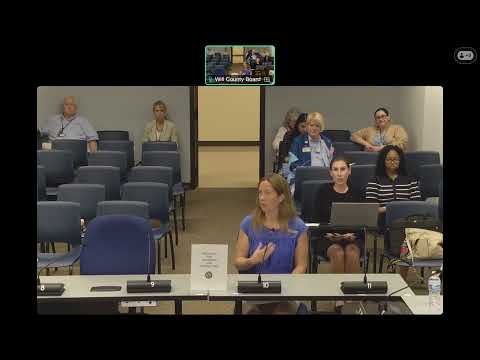
Will County health department highlights emergency‑preparedness ranking, funding shortfall and community outreach
Summary
County health staff said the Illinois Department of Public Health named the state 'high performing' for emergency preparedness; the department sought but did not receive an increase to the local health protection grant and hosted a state listening session and senior social‑connectedness efforts.
The Will County health department updated the committee on preparedness, legislative advocacy and community outreach.
Elizabeth Blada told the committee that the Illinois Department of Public Health recently named Illinois a "high performing" state for emergency preparedness, the highest ranking the state can receive. She said public‑health partners are already preparing for large events such as the upcoming World Cup by monitoring wastewater, hospitals and social media to detect emerging threats.
Health Equity Manager Aishwaria (Ashwaria/Aishwaria) Bal Krishna summarized recent legislative outreach: the department advocated for an increase to the local health protection grant in the governor’s budget — originally a $10 million ask to raise the pool from about $20.1 million to approximately $30 million statewide, later reduced to a $6 million request — but neither proposal was adopted in the final budget. Blada said the department will continue advocacy with regional legislators.
The department hosted a community listening session at the county health department with about 25 participants to gather input on health‑care access and local needs; the state will provide a formal report on the session. The health department is coordinating regionally with the Northern Illinois Public Health Consortium and advancing a senior social‑connectedness initiative with partner organizations including Age Guide.
On disease surveillance, staff noted tick surveillance funding of roughly $8,000 per year and reiterated interest in federal funding streams where appropriate. Cheryl Peard reported on a recent animal‑exposure investigation involving a raccoon and two dogs; testing found the raccoon was not rabid and there are currently no confirmed human rabies cases.
Committee members asked for a deeper briefing from the department’s epidemiologist; staff agreed to bring that specialist to a future meeting to explain testing and human‑case processes.
The committee heard no formal vote on funding during this session; department staff requested continued legislative engagement and said they will share the listening‑session report when it arrives.