Get Full Government Meeting Transcripts, Videos, & Alerts Forever!
Get email alerts on the Watkins Mill Fairgrounds topic
No spam. Unsubscribe anytime.
Developers and residents press Gaithersburg to prioritize housing at Watkins Mill; staff weighs mixed‑use options for fairgrounds
Summary
At the June 8 work session, developers and residents urged the city to prioritize housing—especially for‑sale and larger units—at the Watkins Mill town center instead of speculative office or dispersed retail; staff outlined three redevelopment scenarios for the fairgrounds and said the plan will try to balance residential needs with a town‑center commercial element.
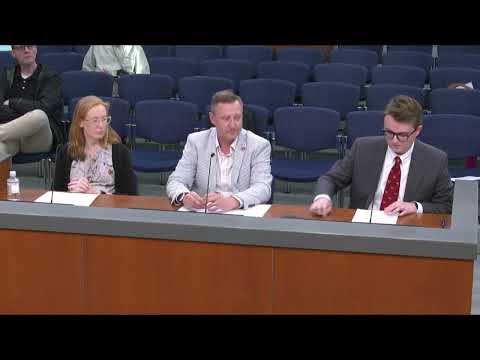
Developers, residents and city planning staff clashed over priorities for Watkins Mill Town Center and the adjacent fairgrounds during Gaithersburg’s June 8 joint work session.
Several public speakers — including Lee Henry and an attorney for PY Homes — told the mayor and council that market evidence and the city’s retail study point to stronger demand for housing than for new office or retail in the Watkins Mill area. Lee Henry said the city’s retail study projects limited net new retail demand through 2040 and urged: “If we want a vibrant Watkins Mill Town Center, we should put housing at the center of the strategy and allow commercial uses to emerge where market demand exists.”
Scott Wallace, representing PY Homes (a contract purchaser of roughly 22 acres in the Watkins Mill core), told the group that an emerging proposal for for‑sale town houses and two‑over‑two units could be jeopardized if the master plan requires dispersed commercial throughout the town center. "Recommending employment uses along the railroad tracks and distribution of commercial throughout the core is not economically viable," he said, urging the plan to prioritize residential delivery.
Planning staff acknowledged the market concerns but said staff intent is to preserve a town‑center concept that includes a mix of uses — a residential emphasis in some places while maintaining a small commercial "third place" that serves daily needs. Emily described the fairgrounds analysis in three scenarios: A) status quo commercial/office/residential; B) a mixed‑use redevelopment with employment concentrated along the rail and residential buffered toward 355; and C) an employment campus (research/industrial/office) with rezoning options.
Councilmembers and commissioners asked staff to be pragmatic and to avoid locking the city into a prescriptive blueprint that would prevent feasible housing projects from proceeding. Developers argued that requiring commercial in specific locations will slow housing delivery and create non‑marketable commercial parcels; staff replied the draft guidance is intended to be directional and that specific rezoning or sketch‑plan review would be required before any land‑use change.
Speakers on both sides asked for clarity about parking and infrastructure: a major venue or campus would likely need structured parking, and any redevelopment of the fairgrounds should plan for multimodal access to 355, the rail corridor and the proposed BRT station. Several councilmembers suggested the city explore creative approaches — partnering with nonprofits to assemble parcels, using city‑owned land to catalyze civic uses, and considering relocation stipends or other measures to reduce displacement risk when redevelopment occurs.
Staff said they will reflect the hearing comments in the public‑hearing draft and return to planning commission and council; in several cases staff noted the purpose of the master plan is to send clear market signals but not to foreclose future waiver processes or site‑specific proposals.