Get Full Government Meeting Transcripts, Videos, & Alerts Forever!
Get email alerts on the Maternal Health Information Safety topic
No spam. Unsubscribe anytime.
Language barriers and consent gaps undermine postpartum safety, study and webinar presenters say
Summary
A multi-institutional study presented at an NNLM Region 1 webinar found that language barriers, missing translation, and informal consent practices leave Spanish-speaking and immigrant mothers at risk during postnatal hospital stays, prompting calls for clearer information roles for libraries and clinical teams.
Dr. Amelia Gibson, an associate professor and co-director of the MLIS program at the University of Maryland, on a Region 1 NNLM webinar described findings from a multi-institutional study showing that inconsistent information practices in postnatal hospital care can erode patient safety and trust.
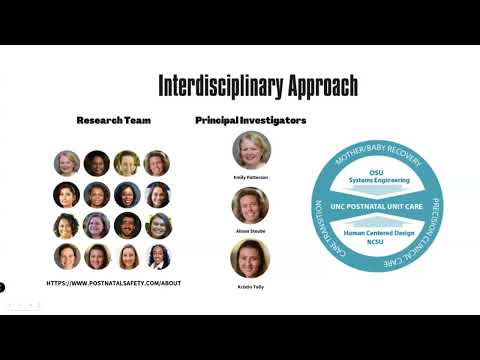
The study, funded by the Agency for Healthcare Research and Quality and conducted between 2019 and 2024, used interviews, chart reviews, clinician shadowing, Vocera communication analysis and in-room filming during the first 48 hours after delivery. Gibson said the team found five overlapping ways patients described safety—access to information and tools, concrete actions by staff, autonomy (including informed consent), affective experience, and a summative assessment of outcomes—and that patients and providers often defined those elements very differently.
Those differences had concrete consequences for Spanish-speaking and immigrant mothers, Gibson said. She described multiple examples where translation services were not offered or were routed through an English-speaking partner rather than the mother herself, leading to situations where a partner answered questions and the mother did not receive the vaccine information or explanation directly. The research team intervened in real time when they observed cases where mothers went for extended periods without food or lacked basic information about care.
"I don't want to die in here by myself," one participant recalled telling staff in an operating room, a memory Gibson cited to illustrate how emotional support can shape a patient's sense of safety even when clinical outcomes are favorable. The team also captured instances of defensive information behaviors—withholding information, 'testing' protective devices such as infant security bracelets, seeking information laterally among peers, or disengaging from care—behaviors Gibson framed as rational responses to institutional information structures rather than individual failings.
Gibson and colleagues categorized trust into three framings: trust as confidence (belief in clinicians' competence), trust as expectation (transactional faith that required tasks will be performed), and trust as submission (a lack of real choice). The latter—described by some Black and Latina Spanish-speaking mothers—reflected situations where patients felt they had no option but to accept care, sometimes accompanied by skepticism or withholding of information.
The study’s findings raise measurement and practice concerns, Gibson said. Many clinical quality surveys focus on summative outcomes ("no injuries, no deaths") while failing to capture whether patients felt respected, informed, or able to participate in decisions. That mismatch can hide persistent problems: a provider may judge care safe because no injury occurred, while a patient experienced violated autonomy or lack of access to necessary information.
In a question-and-answer session, Gibson urged that roles be clarified: clinicians need to ensure translation, informed consent, and patient-centered communication; libraries and community organizations (including public librarians and doulas) can provide safe, non-clinical spaces for people to ask questions and verify information without fear of provider reprisal. She noted hospital systems must make space for community health workers and doulas to support information needs and that interdisciplinary programs should be fostered where possible.
Gibson said portions of the research have been published in Social Science & Medicine. The NNLM Region 1 webinar recording will be posted to the Region 1 YouTube page and attendees were directed to an evaluation link for continuing-education credit.
The webinar presentation emphasized that remedying information marginalization requires both measurement changes (to capture patient-centered definitions of safety) and operational steps—expanded translation services, clearer consent processes, and better integration of community information supports—rather than relying solely on retrospective outcome measures.