Get Full Government Meeting Transcripts, Videos, & Alerts Forever!
Get email alerts on the Abatement Collection topic
No spam. Unsubscribe anytime.
Commission authorizes tax‑bill and foreclosure options to collect nuisance abatement costs
Summary
Ordinance 2026‑14 lets Treasure Island use non‑ad valorem special assessment liens on tax bills and foreclosure to recover costs for vacant‑lot stabilization and nuisance abatement, and commissioners asked staff to publish resident guidance on reporting and timelines.
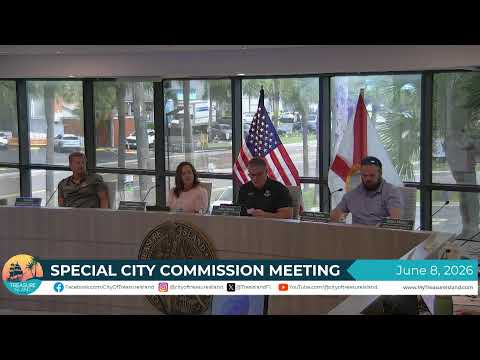
The Treasure Island City Commission unanimously approved Ordinance 2026‑14 on June 8, creating or clarifying alternative collection methods for city costs to abate nuisances, including the option to place non‑ad valorem special assessment liens on the tax bill and to foreclose to recover unpaid amounts. The vote included Vice Mayor Vasquez, Commissioner Clark, Commissioner Sison and Mayor Doctor; Commissioner Dicki was absent.
The ordinance amends Chapter 18 (Environment), adding vacant‑lot stabilization methods and clarifying abatement procedures and methods of collection available under Florida law, including foreclosure and collection on the tax bill as a non‑ad valorem special assessment lien. Staff said the procedure provides an option particularly useful for homestead properties where other collection methods may be limited.
During public comment Sarah Pennington asked staff to produce clear, resident‑facing guidance — such as a flowchart and phone numbers — explaining how neighbors can report nuisances, expected timelines for abatement, and how the city will proceed. Commissioners agreed that a simple instruction manual or flowchart would be helpful and directed staff to prepare such materials.
The commission approved the ordinance by roll call and adjourned the special meeting. Staff said appeals for the new collection methods may be made to the special magistrate as provided in the ordinance.