Get Full Government Meeting Transcripts, Videos, & Alerts Forever!
Get email alerts on the Code Enforcement topic
No spam. Unsubscribe anytime.
Treasure Island adopts code‑enforcement overhaul to clarify fines, hearings and lien remedies
Summary
Ordinance 2026‑13 updates the city’s code‑enforcement rules to define irreparable violations, authorize administrative fees, clarify hearing procedures and allow foreclosure on liens; the code enforcement board chair and commissioners said the changes strengthen due process and enforcement capacity.
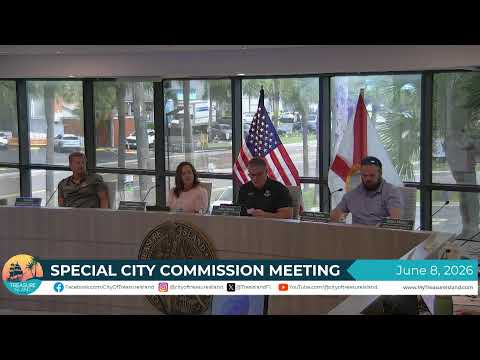
The Treasure Island City Commission unanimously approved Ordinance 2026‑13 on June 8, 2026, updating Article 3 of the city’s code‑enforcement chapter to clarify enforcement definitions, board qualifications, hearing procedures and remedies for non‑compliance. The vote included Vice Mayor Vasquez, Commissioner Clark, Commissioner Sison and Mayor Doctor; Commissioner Dicki was absent.
The ordinance adds explicit language for irreparable or irreversible violations, sets membership and ex parte disclosure requirements for the code enforcement board, clarifies special magistrate qualifications and hearing procedures, and authorizes administrative fees and cost recovery. It also provides a statutory path to foreclose on liens placed for unpaid administrative penalties and abatement costs and corrects scrivener’s errors and outdated language.
Don Nemus, chair of the code enforcement board, told commissioners the revisions “clarify a lot of rights and a lot of procedures” and give the board needed authority to pursue dangerous cases. He thanked staff for work on drafting rules and noted that requests to reduce or eliminate fines and liens will come to the commission in some cases because liens require commission action. Nemus explained that liens can ultimately be foreclosed to remedy long‑standing non‑compliance.
Commissioners emphasized the growth in non‑compliant properties after recent flooding and praised the ordinance for protecting due process while increasing enforcement capacity. Staff noted that the changes may require additional legal support: the city will provide legal counsel to prepare cases, and the code enforcement board will still require counsel to advise the quasi‑judicial proceedings.
The ordinance was approved by roll call: Vice Mayor Vasquez — yes; Commissioner Clark — yes; Commissioner Sison — yes; Mayor Doctor — yes. The commission directed staff to prepare implementing rules consistent with the ordinance and to monitor resource needs for code enforcement.