Get Full Government Meeting Transcripts, Videos, & Alerts Forever!
Get email alerts on the Bylaws Rewrite topic
No spam. Unsubscribe anytime.
TSU governance committee begins broad bylaws rewrite amid questions on process, conflicts and deadlines
Summary
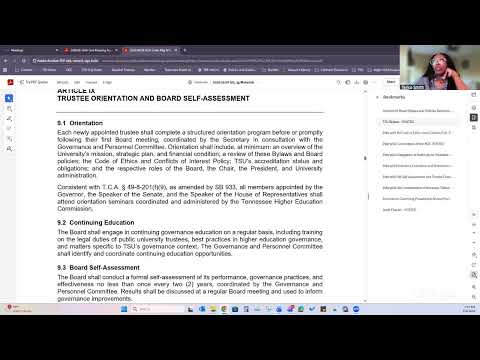
At a June 9 governance committee meeting, Tennessee State University trustees began a substantive rewrite of the board bylaws; trustees raised concerns about transparency, authority to rewrite, eligibility rules (including a proposed ban on trustees serving on the TSU Foundation), supermajority voting requirements and a tight editing timeline.
The Tennessee State University Board of Trustees’ Governance and Governmental Affairs Committee convened June 9 to begin a broad rewrite of the board’s bylaws, launching detailed debate over process, potential conflicts of interest and a compressed schedule for trustees to submit edits.
Trustee Terrica Smith, chair of the governance committee, opened the meeting by saying the board must periodically review its governing documents to support “transparency, accountability, efficiency, and the long term success of TSU.” The committee moved and approved the meeting agenda by roll call before proceeding to a line-by-line discussion of a draft bylaws rewrite circulated in the board materials.
Secretary Jeanette Brown, who presented administration feedback, highlighted a set of recommended technical changes including updated statutory references and a clarification that the board — not the university president — selects the student trustee, with administration providing application collection and recommendations. “We had some reconvening of this board, and so we wanted to make sure that the statutory language is updated to reflect that,” Brown said, and advised narrowing any broad confirmation language to align with the board’s delegation-of-authority policy.
Trustees pressed for clarity about how the review began and whether prior gatherings involved deliberation. Trustee Charles Traubberg said he could not find a formal record authorizing a rewrite and asked where the committee’s responsibilities had been publicly communicated; he also raised concerns about an April 30 meeting he had not attended. Secretary Brown and other trustees responded that the April 30 session was informational only and “we did not deliberate,” and said there have been no private meetings related to the bylaws work.
The draft produced practical debate over content. Trustee Traubberg questioned language in section 1.7 that would disqualify a prospective trustee who serves on the TSU Foundation board. Proponents described the change as addressing a perceived conflict between dual fiduciary responsibilities, while opponents said conflicts can often be managed through disclosure and recusal. The committee agreed to note objections and revisit the wording.
Trustees also discussed moving prescriptive procedural text — for example, detailed steps for student trustee selection and quorum/voting calculations for committees — out of the bylaws and into a committee policy or administrative manual. “That’s the kind of thing that you can take out wholesale from that moving forward and move to a separate thing,” Brown said regarding procedural steps.
A separate point of contention was the threshold for certain votes. The draft includes supermajority requirements in places; Trustee Jeanette Traubberg urged returning to a simple-majority standard for matters historically decided by a majority, calling the default two-thirds rule unnecessary in many cases. Committee members agreed to flag and revisit any supermajority language.
Trustees also questioned process provenance: Chair Smith said she prepared the draft internally and that she “used a little bit of AI,” rather than outsourcing the project to outside counsel. The disclosure prompted procedural questions about how edits should be submitted; Brown and committee members settled on a process whereby trustees will redline the draft and submit changes to Secretary Brown for compilation.
To keep the work moving, the committee set short deadlines. Secretary Brown asked trustees to submit proposed edits by Friday, June 12 so administration staff could compile revisions ahead of the board’s meeting schedule: an informational session on June 16, committee review and possible recommendations to the full board on June 23, and a potential continued board meeting on June 30. “If you have edits, redline them yourself, submit it to Secretary Brown. This committee will meet again, and review those edits further,” Smith said.
The meeting included two recorded formal votes: adoption of the June 9 meeting agenda and a final roll-call vote to adjourn. The committee adjourned at 7:38 p.m. Central. The bylaws rewrite will return to the committee for further edits and legal review before any recommendation to the full board.
What’s next: Trustees will submit redlines by June 12; administration will compile changes for committee review ahead of board sessions later in June. The committee also agreed to revisit flagged items — including the proposed TSU Foundation disqualification language, supermajority thresholds and which procedural items should be moved to separate policy documents.