Get Full Government Meeting Transcripts, Videos, & Alerts Forever!
Get email alerts on the County Finance topic
No spam. Unsubscribe anytime.
Van Zandt County workshop advances plan for 2% sales tax CAD to fund roads, first responders and infrastructure
Summary
Van Zandt County commissioners and residents spent a workshop debating a proposed County Assistance District that would add a 2% sales tax projected to raise about $3.7 million countywide; discussion focused on voter eligibility, interaction with existing Emergency Service Districts (ESDs), board oversight and whether allocations to fire and roads should be set on the ballot.
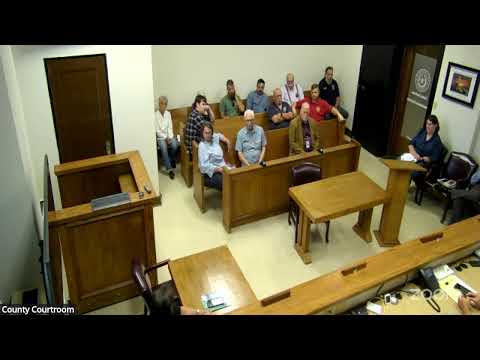
Van Zandt County commissioners met in a workshop to discuss creating a County Assistance District (CAD) that would add a 2% local sales tax to fund roads, first responders and other county infrastructure.
Committee member (S4) opened the substantive discussion by stressing the CAD sales tax would be "separate from your property taxes," calling it "supplemental income" that could be used for roads, radio towers and first responders. S4 estimated a countywide 2% levy could produce roughly $3.7 million in additional annual revenue if adopted.
The court and attendees discussed who would vote on the measure. S7 explained the election would apply only to voters in unincorporated areas; residents inside municipalities such as Canton, Wills Point and Grand Saline would not see the CAD on their ballots. Commissioners and staff said accurate GIS maps and city cooperation are needed to identify eligible voters before ballot certification.
Speakers also clarified legal mechanics. S7 and S2 emphasized that the CAD sales tax would not count against the 3.5% ad valorem property tax cap because sales tax is administered in a different "bucket" by the state, and retailers remit collections to the state, which then redistributes jurisdictional shares to counties and cities based on seller reports.
Several residents and business-owners raised concerns about businesses charging higher sales tax rates than allowed in some locations. S4 and others said local surveys found many vendors collect 8.25% in some places, and commenters asked whether the county should report overcharges to the Texas Comptroller or instead focus on public education and a county-run remedy. S9 noted that refund requests generally must be filed by the individual customer under current state practice.
A major thread of the workshop was whether ballot language should specify allocations (for example, a stated percentage to volunteer fire departments and roads) or let future commissioners decide allocations during budgeting. Volunteer fire department representatives warned that without a guaranteed allocation they would be reluctant to campaign for the tax. Others said tying allocations into the ballot would make the measure inflexible and difficult to adapt to changing priorities; S7 noted properly written ballot language can lock funds into specific uses if that is the voters' intent.
Attendees also discussed interaction with existing Emergency Service Districts (ESDs). S7 and others said where an ESD already levies permitted sales taxes the CAD may need carve-outs so the same geographic area is not charged twice; mapping those carve-outs and confirming which areas are covered by ESDs is part of the technical work before an election.
Commissioners acknowledged process questions remain. Staff (S10) and commissioners said the county needs up-to-date GIS maps, legal review of ballot language, and outreach to municipal and ESD officials. The group identified an internal deadline for paperwork and mapping ahead of an Aug. 17 cut-off cited in the workshop and said the goal is to place the measure on the November ballot, with collections starting after state processing.
Chair (S2) closed the workshop, thanking attendees and noting further workshops and precinct-level town halls will follow to refine ballot language, address mapping, and present an allocation framework to voters.