Get Full Government Meeting Transcripts, Videos, & Alerts Forever!
Get email alerts on the Public Safety Infrastructure topic
No spam. Unsubscribe anytime.
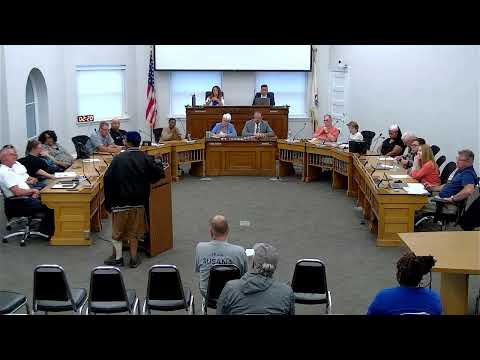
Freeport council debates street-light upgrades and whether to pursue changes via utility franchise agreement
Summary
Council members discussed a second list of low-light, high-crime locations and whether to pursue a comprehensive upgrade through renegotiation of the franchise agreement with the local utility (ComEd) or to fund additional poles and fixtures directly; staff recommended pursuing franchise negotiations first and returning with costs and recommended locations.
Alderman Stacy asked council to consider a second list of locations that need additional street lighting and urged staff to act after several residents described safety problems and vehicle crashes on dimly lit blocks.
"There's crime all over," Alderman Stacy said, asking staff and council to prioritize additional lighting in problem areas. City Manager Boyer said staff had reopened the city’s franchise agreement with the local utility to explore a citywide schedule of light replacements and upgrades, noting light output from LEDs declines over time and that a franchise negotiation offers an opportunity to address many locations at lower cost.
Police Chief Russell said he had not seen the list of suggested locations and cautioned that lighting is only one part of crime prevention. "Darkness equals fear," Russell said, and added that a "heterogeneous" approach — data, intervention and other programs — is needed in addition to lighting.
Public commenters and several aldermen described specific safety concerns: Shiante Bradford said Ring cameras on her block could not capture suspects because only one street light serves her 200-block of Broadway; Mia, a resident, told the council the city is "losing black people to violence" in poorly lit neighborhoods and urged quicker action.
Staff and technical clarifications: Director Seco said the city replaced 63 fixtures in 2025 at roughly $374 each (about $24,000 total) and flagged recurring electric and maintenance costs; staff member Darren said adding a new pole and fixture where none exists would be far more expensive — roughly $14,000 per location.
Council members were split on timing and funding. Several members supported pursuing the franchise agreement first to secure broader, lower-cost upgrades through the utility; others argued council should set aside budget money and give staff a clear directive to identify priority locations. Alderman Sanders used the discussion to urge stronger collective council direction on problem-solving and staff directives.
Outcome: No ordinance or vote was taken. Manager Boyer recommended staying the course with franchise negotiations and returning to council with negotiated outcomes or, if negotiations fall short, with budget proposals for city-funded lighting installations. Staff was asked to compile costs and recommended locations for further council action.
Attributions: Quotes above are attributed to Manager Boyer, Chief Russell, Alderman Stacy and public commenters who appeared during the item.