Get Full Government Meeting Transcripts, Videos, & Alerts Forever!
Get email alerts on the Insurance And Capital topic
No spam. Unsubscribe anytime.
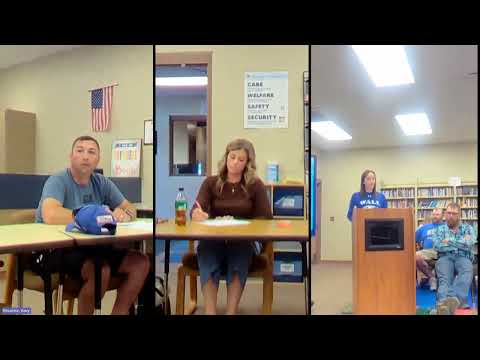
Wall School District 51‑5 approves capital outlay plan and workers’‑comp resolutions, declines wind/hail buyback, authorizes cyber insurance shopping
Summary
The board adopted a five‑year capital outlay plan and workers’ compensation resolutions, declined a proposed wind/hail deductible buyback (citing district reserves and planned roof work), and authorized staff to shop for expanded cyber insurance after learning current cyber coverage is limited.
At its June meeting the Wall School District 51‑5 Board moved a package of fiscal and risk‑management items that affect both near‑term projects and the district’s insurance posture.
The board approved an updated five‑year capital outlay plan required under South Dakota law, listing technology upgrades, transportation replacements and facility priorities including an updated bell system and possible future CTE equipment. Administrators said the plan is a working document and can be revised as funding and priorities evolve.
On insurance, trustees approved two workers’ compensation items (Resolution 26‑4 and Resolution 26‑5) and authorized the required participation documents and signatures.
Administrators briefed the board on a change many insurers now use for wind and hail deductibles: EMC proposed moving to a percentage‑based deductible (about 1% of building value), which the district estimated would lift the wind/hail deductible on its main building to roughly $216,000 from a prior $50,000. An agent offered a deductible buyback policy to cover the gap at about $12,859 per year. After discussion about the district’s cash reserves, planned roof and capital work, and the long‑term cost/benefit, the board reached a consensus to decline the buyback coverage for now.
The board also addressed cyber risk. The district’s current property/liability policy provides only a limited cyber line (maximum payouts reported in the packet at about $50,000). Administration presented an option for up to $1 million in aggregate cyber coverage (an example quote in the packet was $3,533) and asked for authority to solicit additional quotes and to bind replacement coverage. The board voted to authorize district administrators to pursue expanded cyber insurance and to remove the minimal cyber line in the existing policy once replacement coverage is secured.
Why it matters: The capital outlay plan shapes long‑term facility and equipment spending. The decision to forego the deductible buyback balances the cost of annual buyback premiums against the district’s ability to fund losses from capital reserves and planned roof work. Expanding cyber coverage responds to growing incidents of school‑finance fraud and email‑based wire transfer scams affecting districts elsewhere.
Next steps: Staff will continue to refine the capital plan and will solicit multiple cyber insurance quotes and report back to the board; no change to the district’s property insurance was finalized beyond the workers’‑comp resolutions.