Get Full Government Meeting Transcripts, Videos, & Alerts Forever!
Get email alerts on the District Boundary Change topic
No spam. Unsubscribe anytime.
Former District 461 board members ask Wall School District 51‑5 to consider taking rural schools
Summary
Former District 461 board members presented a proposal asking Wall School District 51‑5 to consider annexing several rural schools, citing a general‑fund deficit and proposing boundary changes that could add about 76–85 students and several hundred thousand dollars in revenue to Wall. The board asked for more data and signaled it would continue the conversation in committee and community meetings.
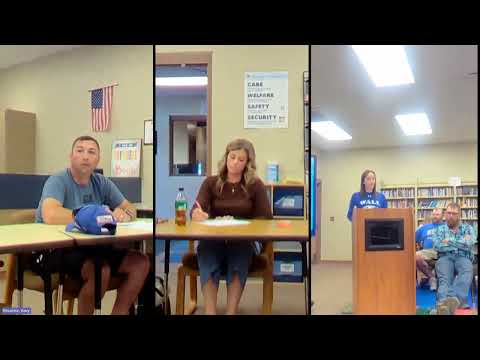
Former District 461 board members and community representatives told the Wall School District 51‑5 Board on June 8 that they want the district to consider taking several rural schools currently in District 461.
Joe Benning, who said he spent nine years on District 461’s board, told the Wall board the rural schools face persistent general‑fund deficits and that District 461 leaders and rural communities had discussed seeking a new partner. Benning said District 461 spent about $1.3 million to operate the rural schools in 2024 while generating roughly $579,000 in direct general‑fund revenue for those schools, and that capital outlay receipts and special‑education funding produced a different pattern of receipts and expenses.
Benning and colleagues showed a draft map and fiscal scenarios they said would give Wall roughly $339,000 back in operating revenue under a conservative drawing of boundaries and up to about $500,000 under other boundary assumptions; they estimated adding about 76–85 K–8 students and nearly $470 million in taxable valuation to Wall’s tax base. They emphasized that the figures depend on exactly where the assessor draws the new boundary.
Board members asked detailed questions about the mechanics and consequences: who would carry outstanding debt service, how capital outlay and per‑student sparsity calculations would change, and how bus routes and staffing would be handled. Presenters said debt service on existing 461 bonds would remain tied to the land and that any transfer would require negotiations with District 461, mapping with the county assessor, and ultimately a vote by affected communities.
The board did not take formal action. Several trustees said the matter should move first to committee for budget and facilities review, and the board invited the presenters to meet with committees and to organize community meetings in the affected rural areas to gather local input. The presenters said they would follow up and return with more precise maps and numbers. The board repeatedly framed the next steps as fact‑gathering rather than a policy decision: any transfer would require negotiated terms and voter approval in the communities involved.
Why it matters: A boundary transfer of this scale would change Wall School District’s enrollment, staffing responsibilities and tax base and would require coordination among districts, the county assessor and voters in affected areas. The board’s request for more precise fiscal mapping and public meetings signals that it will vet the idea but is not committing to a transfer without further review.