Get Full Government Meeting Transcripts, Videos, & Alerts Forever!
Get email alerts on the Lgbtq Health topic
No spam. Unsubscribe anytime.
Council hearing spotlights gaps in LGBTQ+ health services as providers, advocates urge $1 million in city funding
Summary
Philadelphia City Council’s Committee on Public Health and Human Services heard testimony from health officials, clinicians and community providers about federal funding cuts, housing instability, reduced harm-reduction services and long wait lists for gender-affirming and HIV care; witnesses urged a $1 million local investment to shore up services.
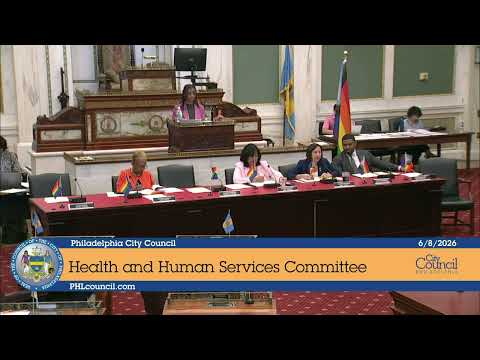
PHILADELPHIA — City council members, public-health officials, clinicians and community providers pressed city leaders on Monday about gaps in LGBTQ+ health services and the strain that recent federal and state funding changes have placed on local programs.
The Committee on Public Health and Human Services held a public hearing on Resolution 260248 — a council-led examination of the state of LGBTQ+ health in Philadelphia — during Pride Month. Chair Ahmad framed the session by reminding the room that “Pride did not begin as a parade. It began as a fight for survival,” and asked witnesses to focus on concrete needs and costs rather than expressions of solidarity.
Council Member Landau, the resolution sponsor, urged the council to convert that sentiment into budget action, saying she has advocated for a $1 million allocation to support mental-health services, gender-affirming care and affordable, culturally competent clinical access. “When the federal government is moving backwards, it is more important than ever that local governments and community providers step up,” she said.
Health-department testimony
Philadelphia Department of Public Health Commissioner Dr. Pollock Nelson described the city’s existing services for LGBTQ+ residents, including city health centers that offer sliding-scale fees, a tele-PrEP program, free at-home HIV/STI kits and a resource hub the department brands as “Philly Keep On Loving.” Nelson said the department runs a transitional housing program for people living with HIV that is structured as a four-year program; on the record he said 99 people have been enrolled, 79 are currently housed and 137 remain on a waiting list as of the end of May.
Nelson also said the department had been notified of unexpected additional federal HIV-prevention and surveillance funding and a separate HRSA (federal) allocation; he provided the figures on the record as the department received them.
Researchers and providers testified that those city programs are under pressure from multiple directions. Dr. Aaron Rector, an infectious-disease physician and health-policy researcher, told the committee federal changes have compressed access to care, program capacity and research funding. "The federal infrastructure that has supported this work is narrowing in every direction," he said, and he described a recent termination of federally funded research that had been intended to evaluate the city’s "Arms Around You" housing intervention for people with HIV.
Community providers described gaps and growing demand
Representatives of Philadelphia Fight, the Mazone Center, Attic Youth Center, Prevention Point and other organizations described rising demand, long wait lists and shrinking reimbursement. Jose Bonitez of Philadelphia Fight urged city investment in specialized, affirming care for LGBTQ+ people and warned that projected Medicaid and state funding changes would leave more people uninsured or underinsured.
Simon Tr of Mazone Center and other providers told council members that a substantial share of care delivered by community clinics is uncompensated: Mazone reported underwriting uncompensated care and absorbing a meaningful revenue delta between costs and insurance reimbursement. Mazone said new patient wait time for a primary-care intake can be measured in weeks to months, while sick visits are handled quickly once a person is in care.
Attic Youth Center Executive Director Jasper Lee said his organization is planning a move to a much larger facility to expand meals, counseling rooms and a dedicated clinic space; Lee described youth-serving drop-in services as lifesaving and urged sustained funding for safe youth spaces.
Harm reduction and syringe services
Several witnesses pressed the Committee to restore or expand harm-reduction services. Prevention Point’s leadership said syringe services and low-threshold care continue but are more difficult to use as policing patterns change behavior and stigma rises; advocates warned that eliminating syringe-exchange funding would likely increase bloodborne infections. Community speakers pointed to a past city health warning that cutting syringe services could raise HIV and other infections.
Public comment and community appeals
During public comment, clinicians who provide gender-affirming surgery, advocates and long-time community organizers said federal political pressure is already driving hospitals and large institutions to scale back services or add barriers. A range of speakers called out what they called “pinkwashing” — Pride messaging without matching policy action — and urged the Council to convert symbolic support into budget and oversight measures.
What’s next
Committee members asked the health department for follow-up details about program parameters, waiting-list criteria and the sustainability of newly announced federal funds. Dr. Nelson said the department’s more detailed report and updated diagnosis data were in the final review stages and expected to be released in the coming week. The hearing closed with no vote; the resolution will remain a vehicle for the committee to collect information and consider potential local budget or policy responses.
— Reporting team: testimony and exchanges summarized from the Committee on Public Health and Human Services hearing on Resolution 260248.