Get Full Government Meeting Transcripts, Videos, & Alerts Forever!
Get email alerts on the Urban Planning topic
No spam. Unsubscribe anytime.
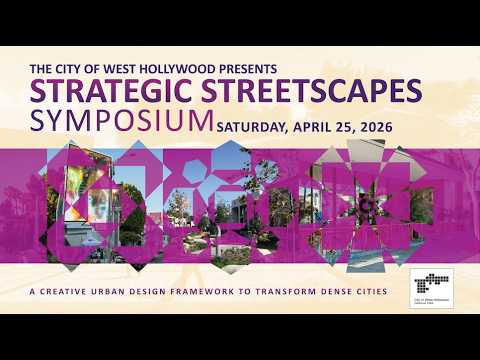
West Hollywood leaders open symposium on "strategic streetscapes" to rethink city streets
Summary
Vice Mayor Danny Hengel and councilmembers opened an annual West Hollywood symposium introducing a 10-point urban design framework that reframes streets as public places and explores green infrastructure, accessibility and small-scale interventions scaled across the city.
Vice Mayor Danny Hengel opened the annual West Hollywood community symposium this morning, urging attendees to "think beyond the scope of any single project to imagine what's possible for our future" as the city examines how to reshape streets in a dense, built-out municipality.
The forum, framed as part of the city’s Earth Month and Green Week activities, introduced a 10-point urban design framework intended to prompt targeted interventions that reshape streets as places for people as well as movement. "These types of community-wide symposia are incredibly valuable," Vice Mayor Danny Hengel said, adding that while the city continues to address current challenges, "it's equally important that we plan thoughtfully for the city we want today and for tomorrow."
The symposium organizers said the framework will push West Hollywood to move beyond streets engineered primarily for higher-speed movement and delivery of goods toward designs emphasizing gathering, commerce, culture and public life. A moderator for the program described the goal as turning corridors into "places for purposeful interactions," and introduced the 10-point framework as a practical tool to reconsider streetscapes at both the block and network levels: "[The framework] invites us to rethink our streets and public spaces with fresh intent," the moderator said.
Councilmember Chelsea Byers highlighted the city's constrained geography as part of the case for creative land use, noting West Hollywood's small footprint of 1.89 square miles and arguing that the city's scale requires innovative approaches. Councilmember Lauren Meister thanked staff and planning commissioners for their participation, calling the symposium a multi-year initiative to help define the city's future.
Councilmember John Erickson linked the streetscapes work to transportation priorities and past state funding, saying West Hollywood has been competitive for statewide dollars and noting that "a few years ago we got over $8 million from the Clean Air Resources Board to beautify our streets." That example was presented as evidence the city can attract external funding to support streetscape projects.
Presenters said the framework will cover design, planning, policy, climate and mobility dimensions; it aims to boost economic vitality, improve accessibility and public safety, and create more welcoming environments for residents of all ages and abilities. The discussion also will examine expanding green infrastructure to support climate resilience and habitat regeneration, as well as upgrading infrastructure and simplifying navigation to make the city more intuitive.
The opening remarks named Rick Abramson and his team as staff leaders who organized the program and noted the attendance of planning commissioners Lynn Hoopengardner and Andrew Solomon and former mayor and councilmember Abby Land. Organizers described the approach as emphasizing small, local actions that are coordinated at scale to create broader change in dense urban settings.
The day’s presentations and panel discussions will explore the 10-point framework and practical strategies for implementing strategic streetscapes in West Hollywood.