Get Full Government Meeting Transcripts, Videos, & Alerts Forever!
Get email alerts on the Special Education topic
No spam. Unsubscribe anytime.
District warns of special‑education funding shortfall; plans reallocations, software fixes and staff reassignments
Summary
Granite School District staff told the board that a confluence of factors — a $1.3 million Medicaid reconciliation payback, a recurring monthly Medicaid allocation reduction of about $143,000, and a rapid rise in students needing intensive special‑education services — require reallocations, a new Focus intake workflow, and reassignment of district staff to schools.
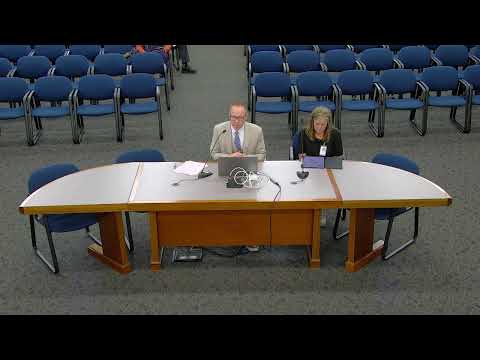
Dr. Day and Assistant Superintendent Bell briefed the Granite School District Board on June 2 about mounting special‑education funding and service delivery pressures and outlined near‑term steps the district will take to address them.
Dr. Day said the district faces several simultaneous challenges: the end of COVID‑era carryover dollars that previously helped absorb growth; a $1.3 million required Medicaid reconciliation payback for an earlier fiscal year; and an ongoing reduction in monthly Medicaid allocations of about $143,000. He described those items as contributing to a “leaky bucket” of funding that has strained special‑education resources.
The district also reported a large increase in students requiring full‑day, intensive services. Dr. Day said the district added 295 students to self‑contained (most intensive) placements this year while about 58 aged out, a net and significant increase in high‑cost placements. He provided per‑student cost examples: some special classes average about $26,000 per student; intensive social/behavioral programs run about $62,000; and certain private placements can cost as much as $174,000 annually.
To respond, Dr. Day outlined a set of operational and budget changes the district will pursue: reallocating staff and paraprofessional hours to where need is greatest, shifting par educator budgeting from an hour‑based to a dollar‑based model so schools can better manage costs, pausing some district office hires and reassigning technical compliance managers and itinerant specialists to school sites, and pursuing additional special‑class sections where fiscally feasible.
Dr. Day also flagged a student undercount issue that has reduced state funding: many out‑of‑district or out‑of‑state IEPs arrived on paper and were not fully entered into the district’s student information system (Focus), and a migrated special‑education module was not fully Utah‑compliant. He said the district will implement a streamlined digital intake (“scram”) in Focus to capture IEP data more quickly, reduce teacher data‑entry burden, and improve the accuracy of counts for state reporting.
Board members pressed for clarity on whether the district can continue to meet its FAPE obligations. Dr. Day responded that the district will meet FAPE but that some services may be delivered in different settings or with larger small groups; paraprofessionals and general‑education teachers will be asked to carry more of the instructional load in some models.
Several board members acknowledged the difficulty of the choices and discussed long‑term options such as increasing baseline special‑education funding, including the potential but politically difficult option of asking voters for more tax revenue. Staff noted some one‑time reserve patches for the coming year but said ongoing solutions will require statewide conversations and long‑term budget decisions.
The board then moved to enter executive session for the purpose of negotiations; a roll call recorded affirmative votes from Julie Jackson, Tim Chandler, Connie Burgess, Chris W., Karen Winder and Nicole McDermott.