Get Full Government Meeting Transcripts, Videos, & Alerts Forever!
Get email alerts on the Community Policing topic
No spam. Unsubscribe anytime.
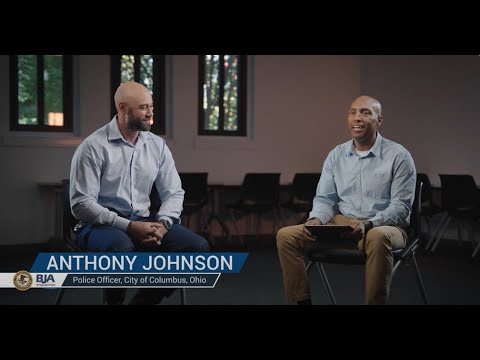
Officer Anthony “AJ” Johnson says one positive interaction can reshape community policing
Summary
Officer Anthony Johnson, known online as the “Dancing Cop,” described growing up in Columbus’s high-crime 'Uzi Alley,' how a police mentor convinced him to join the force, and how his viral videos aim to humanize officers and boost recruitment.
Officer Anthony Johnson, a Columbus police officer known to many as “AJ” or the “Dancing Cop,” described how childhood trauma in a Columbus neighborhood nicknamed “Uzi Alley” and a single positive interaction with a police officer led him to a career in law enforcement and to use social media to promote community policing.
Johnson said he grew up in what he called an especially violent part of central Ohio, where children saw shootings and “the police helicopter was constantly over our apartment.” He said those experiences, combined with family instability and poverty, shaped his perspective: “I absolutely despised police officers,” he said, before describing the turning point when a mentor — an older officer who invited him into his home and encouraged him to join the force — helped change his view.
That mentorship included paying AJ’s way through a regional police academy that cost $5,000, which Johnson said his mentor covered. Johnson described graduating at the top of that academy and working first at a small department in Obetz before eventually being hired by Columbus.
The officer said his public profile began organically after he entered a backyard barbecue in uniform and danced with children; the video was recorded and went viral. The next day he said local media called, and months later he was invited to speak to students at Harvard’s Kennedy School of Government. “It took one positive police interaction to forever change my life,” Johnson said, arguing that similar positive interactions can improve recruitment and retention across law enforcement.
The host, identified in the interview as a representative of BJA, said the Bureau of Justice Assistance is focused on officer recruitment and retention — a priority that Johnson’s story, he suggested, helps illuminate. Johnson urged officers to ‘submerge’ themselves in the communities they serve, build cultural competency and show compassion as a path to changing public perceptions and improving safety.
Johnson described international interest in his approach, saying organizations from El Salvador to Canada have sought to replicate community-engagement tactics he uses, and he credited the approach with creating a cascading effect of more positive interactions in neighborhoods: “When they see me as a human being, it’s easy for them to go, ‘Well, AJ ain’t perfect,’” he said. He also noted the personal impact of the job: he still helps support his mother financially because of opportunities from policing.
The interview ended due to time; the host suggested a possible follow-up conversation to continue the discussion.