Get Full Government Meeting Transcripts, Videos, & Alerts Forever!
Get email alerts on the Homelessness Shelter topic
No spam. Unsubscribe anytime.
Lenoir council, service providers clash over unpermitted sleeping pods used during ice storm
Summary
After a local nonprofit placed sleeping pods at a downtown property during a severe ice storm, the Lenoir City Council defended staff enforcement of zoning and safety rules while residents and clients urged compassion and regional coordination to expand shelter capacity.
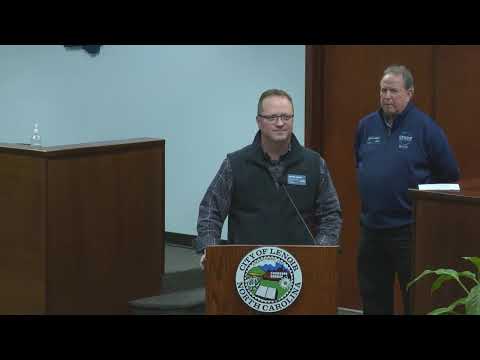
The Lenoir City Council opened its Feb. 17 meeting with a statement addressing non‑permitted “sleeping pods” placed at 532 Harper Avenue and used by a local nonprofit during an ice storm, prompting a packed public comment period in which clients and volunteers urged flexibility and safety officials warned about building‑code limits.
Council read a prepared statement saying the pods were not permitted under city zoning and that staff had met with the property owner and allowed temporary use during the storm. “We completely understood everyone’s concerns. None of us want anyone to sleep outside and certainly not to freeze to death,” the mayor read.
Speakers who said they were helped by the nonprofit gave personal testimony. Joseph Twist said he credits the organization with his sobriety: “If it weren’t for them, I’d be dead.” Susanna Miller, a mother staying with the group, told the council she would have nowhere for her two children without that help. Several other clients and volunteers recounted immediate life‑saving assistance, food, and job referrals.
Denise Aristia, who identified herself as CEO of the nonprofit operating the site, acknowledged permitting mistakes and said the pods had arrived the Friday before the storm and were used to shelter people during dangerous temperatures. Aristia said tow companies were working to remove the pods and that the organization had assisted about 120 people in roughly three weeks, including some who had connected to employment and treatment.
At the same time, city and safety officials stressed legal and safety limits. Fire Marshal Chris Jacobs told the council that a long‑term shelter typically requires a sprinkler and fire alarm system to meet code and protect occupants. “Because a shelter is going to require a sprinkler system. It’s going to require a fire alarm system,” Jacobs said, describing the difference between short‑term warming efforts and a permitted shelter.
Amber Bradford, homeless response manager for the Western Pedmont Council of Governments, urged coordination between nonprofits, local government and regional partners to build sustainable shelter capacity. Bradford cited statewide estimates: “On any given night in North Carolina, more than 11,000 people are experiencing homelessness. Nearly 40% are living outside without shelter,” and said temporary responses must be paired with planning, funding and staffing to succeed long term.
Council’s statement also noted existing shelter networks: it said there are “more than 230 beds available in Lenoir and Cwell County” and urged residents to contact local providers. Several commenters pushed back that those beds do not cover demand or that they come with eligibility limits that leave some people without options during extreme weather.
The council did not vote on a policy change at the meeting. Council members thanked speakers and reiterated that city staff must follow state law and building codes while expressing sympathy for people who are unhoused. Aristia and nonprofit volunteers said they will remove the pods and seek to work with regional partners on transitional housing options; the council said it will continue to consider how to balance emergency compassion with compliance and safety.
The city plans to continue coordination with regional service providers; no formal council directive or new policy was adopted at the Feb. 17 meeting.