Get Full Government Meeting Transcripts, Videos, & Alerts Forever!
Get email alerts on the Water Supply topic
No spam. Unsubscribe anytime.
Regional officials warn Lenoir City council of proposed Charlotte interbasin transfer and ask for local advocacy
Summary
Anthony Star of the Western Piedmont Council of Governments briefed the Lenoir City Council on proposed increases to Charlotte’s interbasin transfer from the Kataba River Basin — a move Star said could reduce flows, raise treatment costs for upstream utilities and limit local growth — and urged advocacy, citing a moratorium through March 2027 and an ongoing UNCC study.
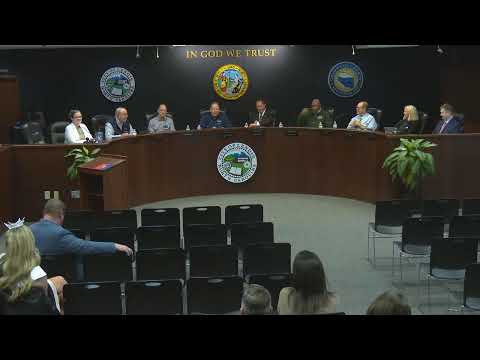
Anthony Star, executive director of the Western Piedmont Council of Governments, told the Lenoir City Council on Jan. 20 that Charlotte Water’s plans to increase its interbasin transfer (IBT) from the Kataba River Basin could strain upstream communities including Lenoir.
"They are planning on asking for an additional 30 million gallons per day to be transferred out of the Kataba River," Star said, describing an increase that would raise Charlotte’s certificate from about 33 mgd toward 63 mgd. He warned that transferring that volume would leave less water in the Kataba, concentrate pollutants and raise treatment costs for utilities upstream.
Star reviewed historical droughts, existing IBT certificates (Charlotte ~33 mgd; Concord/Canapapolis ~20 mgd with 10 mgd from the Kataba; Mooresville ~9.5 mgd), and the basin’s vulnerability. He said academic research and basin monitoring show declining availability and that severe droughts have reduced lake levels and utility intake reliability.
The presentation noted alternatives Charlotte could pursue — including building treatment and supply from the Yadkin Basin or returning treated wastewater to the Kataba (which would not count as an IBT) — and criticized choices that defer capital investment. Star proposed policy responses under study at UNCC: time-limited IBTs that require infrastructure to remove the transfer over a set period, and a drought-mitigation fund paid into by entities approved to take large amounts of water to help affected communities.
Local officials in the meeting voiced concern. One council member said upstream systems "don't have another river to dip into," and the mayor and others praised the COG’s work forming a Kataba River Coalition. Star said the Environmental Management Commission will likely hold a hearing on any IBT application in 2027 and that litigation remains a possibility if interstate impacts arise.
The presentation referenced a legislative moratorium enacted this year on large IBTs (15 mgd or more) that lasts until March 2027 and the UNCC collaboratory study directed to examine statutory processes and recommend legislative changes. Star asked council members to engage state legislators and offered to provide data to support advocacy.
The council did not take a formal vote on the matter at this meeting; the briefing was presented for information and to solicit local engagement.