Get Full Government Meeting Transcripts, Videos, & Alerts Forever!
Get email alerts on the Charter Review topic
No spam. Unsubscribe anytime.
Charter commission debates moving finance director under town administrator and adding appeal/contract protections
Summary
Harwich’s charter commission discussed language to make the finance director a day‑to‑day report to the town administrator while preserving the selectboard’s hiring/firing authority, adding personnel‑contract protections and an appeals path for material financial concerns; commissioners also leaned toward requiring four votes to remove a town manager.
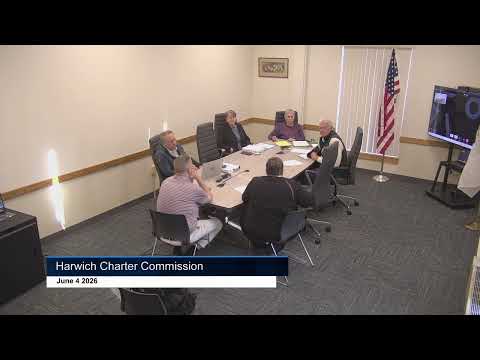
Members of the Harwich Charter Commission spent substantial time debating proposed charter changes that would clarify the finance director’s day‑to‑day reporting, formalize annual performance evaluations and add contract protections and appeal rights for material fiduciary issues.
Finance Director Jen Menz told the commission she is comfortable reporting day‑to‑day to the town administrator but asked for an explicit path to appeal to the selectboard if she believes a material financial issue has been mishandled or if she faces directives she believes are unlawful. "I need an avenue to go around that person," Menz said, describing the need to bring serious financial concerns to the selectboard "without recourse, right, or punishment."
Commissioners discussed several drafting approaches. One option is to add the phrase "personnel contracts" to charter sections (discussed in the meeting as sections 441 and 451) so that contract language continues to protect individuals whose contracts already provide an avenue to the selectboard. Another approach would explicitly put evaluation language in section 432 P so the town administrator annually evaluates department heads, including the finance director, while the selectboard retains appointment and termination authority.
The group also discussed whether to include a whistleblower policy or leave that to town personnel policy rather than the charter. Several members recommended leaving detailed personnel policies (including whistleblower procedures) outside the charter and ensuring contract language protects staff in the short term.
Separately, commissioners debated whether hiring and firing thresholds for the town administrator should change. The draft charter currently requires a supermajority to hire; removal has historically needed three votes. Several commissioners said requiring four votes to terminate a town manager would reduce the influence of a single swing vote and minimize politicized terminations. At one point the chair recorded that "five of the five members present feel in favor of four."
The commission did not finalize charter text at this meeting; members asked staff and counsel to draft language that preserves the selectboard’s ultimate authority while ensuring the finance director has a clear, protected route to raise material financial concerns.
Next steps included revising draft charter language for the next meeting, inserting evaluation language into the draft where appropriate, and circulating the updated redline for review prior to public hearings.