Get Full Government Meeting Transcripts, Videos, & Alerts Forever!
Get email alerts on the Water Rates And Abatements topic
No spam. Unsubscribe anytime.
Board delays water-rate increases; directs staff to revise disaster-abatement form and consider 50% one-time relief
Summary
Staff presented FY27–FY31 rate scenarios and recommended no rate increase for FY27; the board directed staff to draft abatement-form changes and consult legal to consider a one-time 50% disaster abatement and exclusions for outdoor spigots and showers.
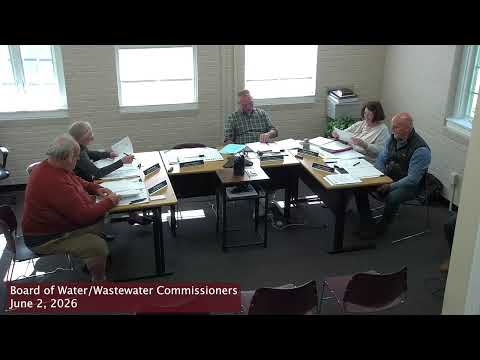
The Board of Water and Wastewater Commissioners reviewed multi-year water-rate scenarios June 2 and decided not to raise rates for fiscal year 2027, while directing staff to prepare regulatory and form changes on disaster abatements.
Finance staff presented historical water use and revenue baselines, noting annual pumping around 800 million gallons with up to 100 million gallons of year-to-year fluctuation and that July–September accounts for about 47% of annual pumping. The board uses conservative, low-confidence (wet-year) projections and aims to include a 10% budgeted surplus when setting rates; retained earnings were reported at approximately $1.6 million.
Dan (staff) told the board that the current rate structure will fund FY27 because planned bonding for the Route 28 project was deferred into the next fiscal year. "I would not be asking the board to take any action on rates just because right now current rates will fund the FY27 budget," staff said during the presentation. Commissioners agreed to revisit rates next year when debt hits the operating budget.
Separately, staff reviewed disaster-abatement practices and 2024–2026 statistics: original leak-related bills totaled about $17,500, $11,500 in charges were abated and roughly $5,800 remained to be collected. Staff recommended evaluating a 50% one-time abatement (applied to consumption above base but excluding the base rate) instead of billing all usage at tier one; commissioners generally favored the 50% concept as a compromise between relief for customers and revenue protection for the enterprise fund.
The board also asked staff to add specific questions to the abatement application—requesting whether an applicant has filed or expects an insurance claim and asking the applicant to describe steps taken to maintain or winterize the property. Commissioners said changes to department regulations (for example, expressly excluding irrigation, spigots and outdoor showers from disaster abatements) will require a published public hearing and legal review. Staff was directed to return with draft regulatory language and a revised form.
Next steps: staff will draft a revised abatement form that includes insurance-disclosure and property-management items, consult legal on regulatory changes, and present proposed language at a subsequent meeting with a public hearing as required.