Get Full Government Meeting Transcripts, Videos, & Alerts Forever!
Get email alerts on the Un Leadership And Regional Issues topic
No spam. Unsubscribe anytime.
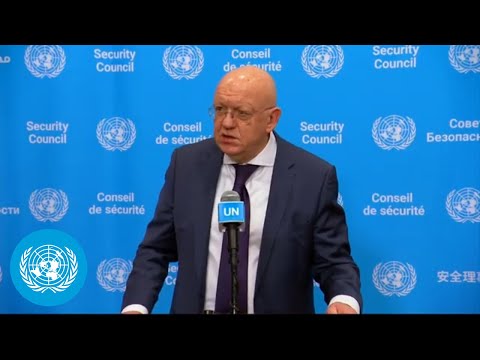
Russian ambassador says UN leadership has "taken sides," comments on SG candidates, Iran/Gulf draft, Syria and Palestinian territories
Summary
At a United Nations stakeout, the Russian ambassador criticized current UN leadership as biased, described Russia's meetings with secretary‑general candidates, and addressed Russia‑China draft diplomacy on Iran/Gulf, concerns over the West Bank and Gaza, and Russia's military presence in Syria.
The Russian ambassador told reporters the Russian mission is meeting candidates for the next United Nations secretary‑general who request meetings in Moscow but criticized the current UN leadership as partial in its handling of the Ukraine crisis. "I do not hide it... the UN secretariat has divorced himself for the possibility of being instrumental in the resolving the crisis in Ukraine by taking sides," the ambassador said, adding that a future secretary‑general could be "instrumental" but that selection depends on Security Council political choices.
On a Russia‑China draft resolution regarding conflict dynamics in Iran and the Gulf, the ambassador said the text "is on the table" but that some council members were reluctant to support it because Russia sponsored it. He warned of a "serious risk of escalation" between the United States and Iran in recent days and said diplomatic efforts by mediators remain important.
Asked about reports of Russian forces being listed among alleged perpetrators of sexual violence, the ambassador rejected the claims, described Russia's military code of conduct and criticized an earlier UN special representative's unverified remarks, saying, "we completely refute the findings of the report."
On the Middle East, the ambassador warned against perceived creeping annexation in the West Bank—citing the E1 project—and said Security Council resolution 2803 has not worked as intended, arguing U.S. support has emboldened Israeli moves that threaten a contiguous Palestinian territory. When asked about U.S. efforts to remove Russian military presence from Syria, he said a Russian naval base remains and that Moscow maintains pragmatic ties with the Syrian government; he was not aware of direct U.S. success in removing that presence.
The stakeout included several exchanges between the ambassador and reporters on these issues; the ambassador repeatedly framed UN actions and partner states' policies as politically driven rather than legally or procedurally impartial.