Get Full Government Meeting Transcripts, Videos, & Alerts Forever!
Get email alerts on the Public Safety Curfew topic
No spam. Unsubscribe anytime.
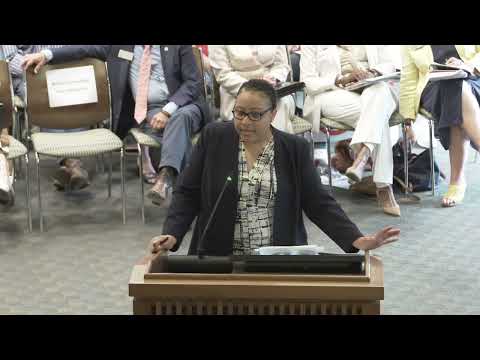
Council advances Uptown-targeted curfew to 2nd reading after hours of public testimony
Summary
Council kept a targeted Uptown curfew (9 p.m. start) on first reading and directed staff to return with a 2nd‑reading ordinance. Supporters said the curfew addresses late‑night disorder and weapons; opponents said selective enforcement risks disparate impacts and urged youth services, data reporting and citywide safeguards.
After lengthy public testimony and debate, Columbus City Council left on first reading a proposed Uptown‑targeted curfew for minors and set the item for a formal second‑reading vote next week.
Police leaders urged the ordinance to curb late‑night disorder downtown. Columbus Police Chief Stoney Mathis told council that weekend disturbances had required extra paid off‑duty coverage and that officers were removing weapons from juveniles during late‑night shifts, saying, “Four homicides is too many; I want it to be zero.” Sergeant Sherman Hayes, who oversees Uptown detail, framed the curfew as an added tool to get minors home safely and to reduce weapons on the street.
Opponents — including civil‑rights advocates, educators and many Uptown patrons — warned that a geographic curfew risks unequal enforcement and racial disparities. “Unless you do a citywide curfew, you’re just moving the problem to somebody else’s neighborhood,” said Dr. Martin Broadwood, who cited empirical research that geographic curfews can displace activity rather than solve root causes.
Several residents and advocates urged alternatives: expanding youth evening programming, widening access to public recreation and libraries after hours, and improving lighting and security in multiple neighborhoods. Parks & Recreation staff outlined existing summer programs and “night ballers,” a weekend late‑night basketball series, and new e‑gaming tournaments intended to provide supervised evening options for teens.
Councilors debated a citywide approach versus a targeted Uptown start. A motion to adopt a citywide 10 p.m. curfew was discussed but withdrawn; instead council left the Uptown targeted curfew on first reading (9 p.m.) and directed staff to prepare data reporting requirements, consideration of nonpunitive first‑offense responses (warnings or community service) and stronger cross‑department youth outreach. A temporary expiration date (Sept. 30) was noted so council could re‑evaluate before next year.
Council will vote on the ordinance at second reading; city staff will coordinate with the Recorder’s Court and juvenile justice partners on recommended enforcement steps and alternatives to fines for first offenses.