Get Full Government Meeting Transcripts, Videos, & Alerts Forever!
Get email alerts on the Infrastructure Data Center topic
No spam. Unsubscribe anytime.
Residents push moratorium and stricter safeguards as Columbus debates technology overlay for proposed ‘‘Project Ruby’’ data center
Summary
A proposed technology overlay to allow hyperscale data centers near Yupitoy/Layfield Road touched off hours of testimony. Columbus Water Works says the city has capacity but that $30M in pipe and pump upgrades would be needed and would be the developer’s responsibility; opponents demanded a 120‑day moratorium, stronger bond, PFAS bans and a binding river cap.
Columbus officials and residents spent more than two hours debating a proposed technology overlay that would make it easier to site large hyperscale data centers on a parcel known in public materials as Project Ruby.
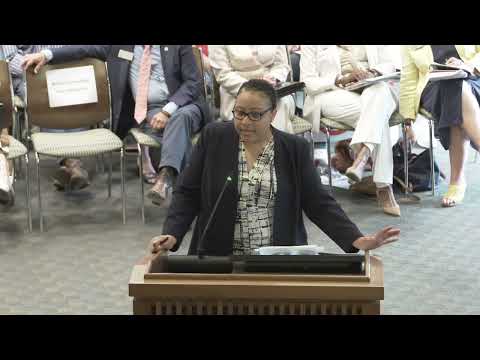
At a packed council hearing, Columbus Water Works President Jeremy Cummings told the council the utility has permitted capacity but stressed the project would require significant extensions and upgrades to water and sewer lines that the developer must fund. “It's gonna be about $30,000,000 to upgrade the infrastructure… and we can't pay for that,” Cummings said, adding that the developer had acknowledged the cost and that the utility would not front it.
Opponents — including homeowners, environmental groups and neighborhood leaders — urged the council to pause the overlay and to add binding protections. “No numbers, no vote,” said Cicely Terry, reading a list of requested changes and asking council to require publication of exact water use, wastewater composition and a refundable bond for all infrastructure extensions.
Speakers warned of broader environmental and fiscal risks if the city approves an overlay without tighter conditions. Multiple commenters raised concerns about long‑term water demand, wastewater discharges and “forever chemicals” (PFAS). As one resident noted, past data‑center proposals nationally often underestimated utility needs at early stages and then sought expansions later in the process.
Council members debated amendments before the meeting closed. On the record the council restored a larger residential buffer around such campuses — reverting a screening setback to 500 feet — and approved language prohibiting diesel backup generators (the council clarified that backup power should meet high emission control standards, e.g., Tier 4 or equivalent). Councilors also discussed requiring developer escrow/bonding to guarantee construction of needed pipe extensions and making any long‑term development agreement publicly available well before final approval.
What the council did not do was impose the moratorium many speakers demanded. Instead, staff and councilors agreed to return the overlay for second reading next week with the new amendments and additional language to address reclamation bonds, pretreatment requirements, drought triggers and public notice. Advocates said the additional language is a start but repeated calls for a 120‑day moratorium to allow fuller technical review and independent hydrology and legal analysis.
Columbus Water Works emphasized that drought plans, pretreatment programs and permitting remain in place and that, under the utility’s model, residential water service would be prioritized in any severe drought. Cummings also said the developer‑funded extensions would include miles of new mains, lift stations and upgrades — the kind of work that would be done only after negotiated terms and engineering plans were finalized.
Council will revisit the overlay at second reading next week; community groups have pledged sustained engagement and said they will press for legally enforceable protections in any developer agreement.