Get Full Government Meeting Transcripts, Videos, & Alerts Forever!
Get email alerts on the Budget Adoption topic
No spam. Unsubscribe anytime.
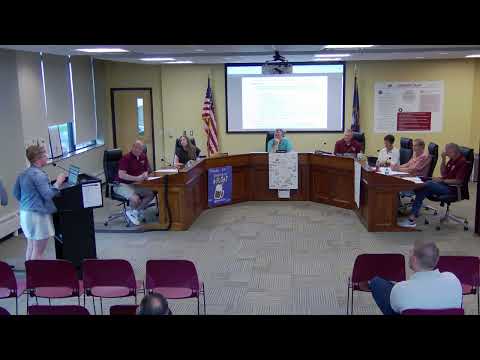
Grandville Board adopts 2026-27 budget after debate over thin fund balance
Summary
The Grandville Board of Education approved the district's 2026-27 budget, approving proposed mill rates while members warned a worst-case fund-balance projection of about 6.5% leaves little margin and could force cuts if uncertain state "31A" funding does not arrive.
The Grandville Board of Education voted to adopt the district's 2026-27 budget after extended discussion about the district's fund-balance position and contingency plans if state aid changes.
Staff presented resolutions for the district's several funds, including a general-fund levy of 18 mills on non-homestead property, a capital-projects levy of about 1.3433 mills (down from 1.4), and a debt levy of 5.05 mills. The board moved and approved the budget by voice vote.
The debate centered on a worst-case projection that the district's unassigned fund balance could fall to roughly 6.5 percent of expenditures for 2026-27 without additional state support. Committee member Bob said he was "uncomfortable with anything below seven completely across the board," emphasizing stewardship and concern about eroding the fund balance. Staff said the presentation showed a conservative, worst-case scenario that allowed trustees to plan for risk rather than surprise.
Board members pressed staff for details about the timing and likelihood of continued state assistance known in discussion as "31A" funds. Staff described three unexpected retirements that increased near-term personnel costs and said the district expects clearer guidance on whether 31A funds will be available by late July or early August; another speaker referenced an October-November window. Administration characterized the budget as conservative and said the district would not need to borrow to meet obligations at the projected level but acknowledged the margin was "razor thin."
Trustees and staff discussed a range of possible savings if revenue falls short: reducing custodial hours, altering transportation routes and drop-only travel for some athletic events, trimming summer custodial hours, relying more on activity funds for some athletics, limiting district-paid substitute time, and scrutinizing intervention and behavior-support programs that were expanded during the COVID-era with federal ESSER funding. Staff noted data showing gains from tier-2 and tier-3 interventions but also signaled the district may be leaning on tier-2 supports more than intended and will re-evaluate how to preserve core instruction while trimming costs.
Administration said negotiating multiyear contracts and rethinking some administrative and third-party positions could help plan for 2027-28. Staff gave sample figures used in planning, including that hiring a brand-new teacher can cost roughly $65,000 total and that modest per-item operational cuts (for example, reducing copy usage) could yield measurable savings.
The board adopted the budget and the related resolutions. The motion passed by voice vote; the transcript records members saying "I" and a single verbal opposed response but does not include a roll-call tally in the public record.
The board instructed staff to continue planning for contingencies, to return with further details if cuts become necessary, and to monitor state decisions about 31A funding. The district scheduled follow-up budget and contract work for the coming months as staff refine projections and prepare for contract negotiations.