Get Full Government Meeting Transcripts, Videos, & Alerts Forever!
Get email alerts on the School Finance topic
No spam. Unsubscribe anytime.
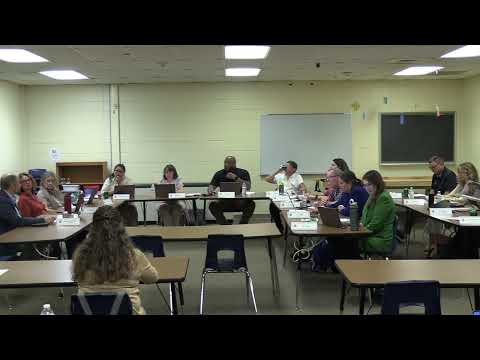
Staff presentation: Tax-incremental districts do not directly reduce Sheboygan Area School District revenue
Summary
District staff told the board that tax incremental districts (TIDs) do not directly reduce levy or state-equalized revenue and said TID closings have yielded $2.9 million to the district since 2016; the board discussed a circulating claim that the district 'lost $165 million' and staff disputed that figure.
A staff member told the Sheboygan Area School District board that tax incremental districts (TIDs) do not directly reduce the district’s revenue from property-levy or state equalization, and that TID closings have returned money to the district.
“What's not debatable is the effect it has on schools: it doesn't decrease, it doesn't increase taxes,” the staff member said while explaining how TID increments are excluded from the district’s equalized property-value calculation and how that exclusion can change the district’s apparent property-wealth per student.
The presenter said the district has received $2.9 million in additional funds from TID closings since 2016 and that money was placed into fund 46 and used toward referendum commitments. The presenter also noted that, because equalization calculations change only after TID increments close, shifts in equalization aid can lag; the speaker cited a typical lag “20 to 27 years” for some adjustments.
A board member raised a claim circulating in the community that the district had “lost $165 million” because of TIDs. The staff member responded that that figure is not accurate and that the district had not lost revenue in the way described; the presenter offered the district’s $2.9 million figure as an example of net funds received from TID closings since 2016.
The board discussed timing questions from members about how quickly equalization aid shifts after a TID closes. Staff said changes do not occur immediately and will typically lag multiple years; the board did not make a formal policy change at the meeting.
The presenter invited board members and interested community members to request a deeper “tax forum” presentation to walk through the formulas and data in more detail.